
Introduction
The multilateral system is facing profound tension as institutions and frameworks that once underpinned global cooperation are increasingly challenged by geopolitical fragmentation, economic inequality, climate disruption, and declining trust in international governance. While multilateralism remains essential for addressing cross-border challenges, current structures struggle to deliver timely, equitable, and effective responses (United Nations, 2025).
At the same time, the legitimacy and effectiveness of multilateral institutions are increasingly questioned. Many core institutions were established in the mid-twentieth century under geopolitical conditions that differ greatly from today. Although global economic and political power has shifted, representation and decision-making structures have not adapted at the same pace (Coulibaly & Qureshi, 2025). As a result, perspectives and priorities from the Global South often remain underrepresented, despite these regions being disproportionately affected by many global challenges.
This disconnect weakens the ability of multilateral institutions to generate legitimate and durable solutions. Calls for reform—including restructuring global financial governance and revisiting decision-making processes—have become more prominent (UNCTAD, 2024), yet progress remains slow due to political deadlock and entrenched institutional arrangements. Against this backdrop, creating meaningful spaces for dialogue, collaboration, and policy innovation grounded in Global South perspectives is both timely and necessary. Bridging the gap between global institutions and emerging policy voices is essential for revitalising multilateralism and ensuring its relevance in addressing contemporary global challenges.
GenSouth: context and methodology
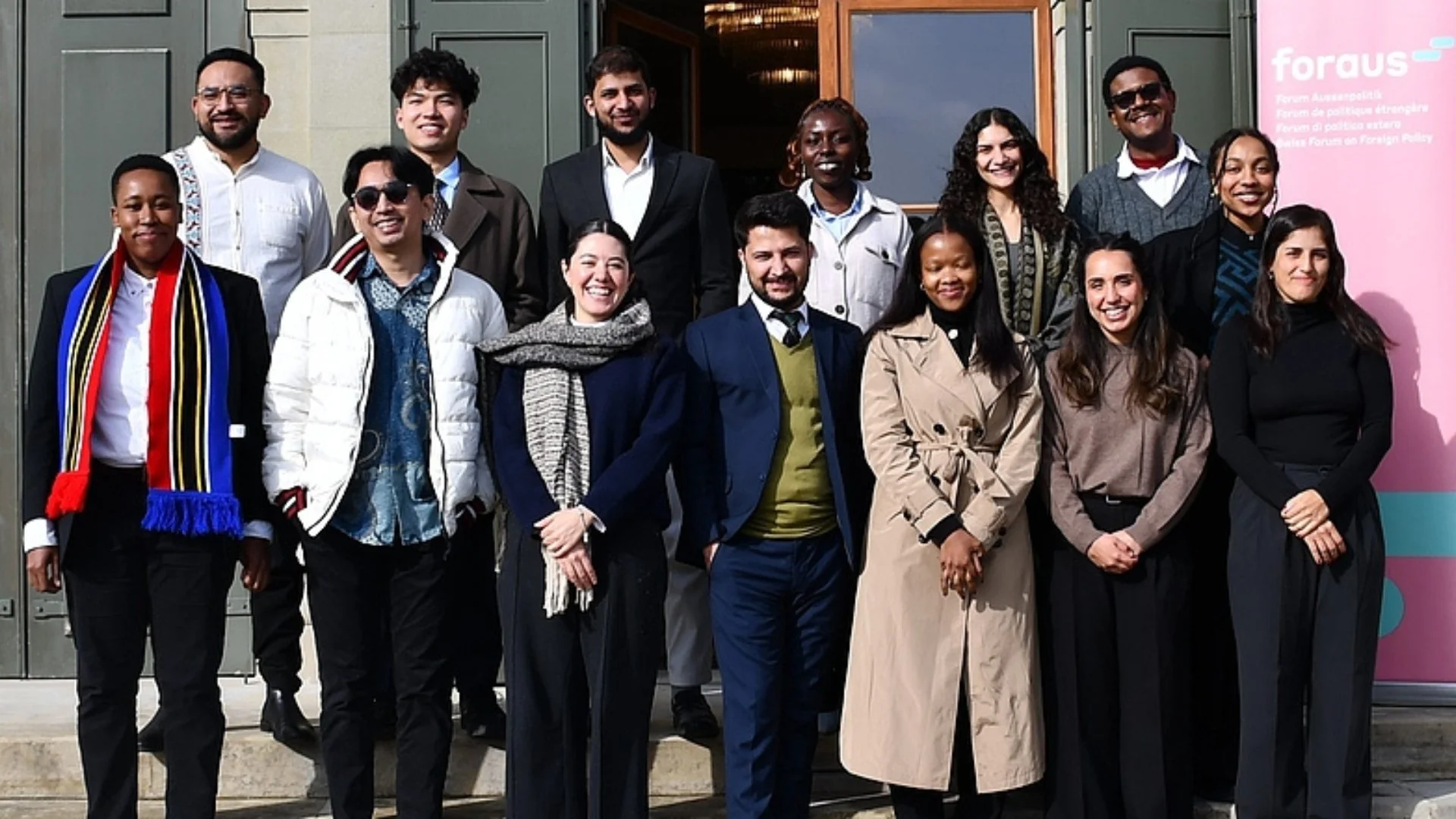
In response to this need, and with the support of the Canton of Geneva, the City of Geneva, the Friedrich Ebert Foundation, the International Geneva Welcome Center, and a foundation from Geneva, foraus organises the GenSouth programme. It brings together professionals and researchers from Global South think tanks, aged 20 to 35, to engage directly with each other and key multilateral actors in Geneva. By fostering exchange, collaboration, and joint reflection, the programme provides a platform to co-develop concrete, policy-oriented solutions.
This Project Brief is the outcome of the second edition of GenSouth held in February 2026. The recommendations were developed through several foresight methodologies. Foresight uses strategic planning, policy formulation, and solution design methods that work with alternative futures rather than predict them, allowing the creation of desired policy pathways (UNDP Global Centre for Public Service Excellence, 2018). During the week-long workshop, participants discussed megatrends, developed scenario pathways, formulated desired futures, and reconciled concrete action plans. This approach, known as prospective-action research or participatory futures, aims to empower participants to question the status quo, shape future ideas, and exercise agency in defining the future (Gidley et al., 2009).
In this Brief, after a short introduction, authors present their desired future through a 2050 vision statement, then work backwards to outline policy changes in reverse order to 2026. Each chapter closes with key recommendations. The themes covered are: the role of public systems in enabling equitable participation in global governance through financial access and mobility; climate justice as a dimension of global equity requiring fairness, accountability, and protection of global commons; peace and security governance, including concerns over the outdated structure of the United Nations Security Council; and reform of the global financial architecture, where systems shaped by Bretton Woods continue to constrain developing economies.
Together, these four thematic areas show the breadth of challenges facing the multilateral system and the importance of integrating Global South perspectives into reform debates. The recommendations in this Project Brief aim to contribute to policy discussions and offer practical pathways for strengthening international cooperation in a complex global environment.
Four visions for 2050
Vision 1: Toward a multilateralism of reciprocity and rights
Introduction
Public systems, financial infrastructure, mobility, social protection, and governance structures have never been neutral (Scott, 1998; Ferguson, 1990). They were historically shaped through colonial extraction, racialised hierarchies, and gendered exclusions that continue to determine who can move, possess, invest, trade, and belong. For women and youth from the Global South, these systems remain sites of structural denial rather than collective care (Fraser, 2017; Bhattacharya & Vogel, 2017). Financial access is restricted through colonial risk assessments and capital flows that privilege the Global North, while mobility regimes criminalise movement from the South, rendering young people, women, and displaced populations immobile, precarious, or invisible within global governance frameworks.
This chapter centers public systems through multilateralism by focusing on two interlinked infrastructures: financial access for women and youth from the Global South, and mobility for youth across borders. These are structural gatekeepers to other rights. Without access to capital, women and youth are excluded from trade, investment, and economic agency. Without mobility, access to education, work, care, safety, and political participation remains constrained. Their current form is rooted in histories of colonial dispossession, postcolonial debt dependency, border militarisation, and ongoing extraction of labour and resources without reciprocal freedom or investment (Rodney, 1972; Mkandawire, 2005; Mezzadra & Neilson, 2013; Mbembe, 2019). Today, economic instability, climate displacement, shrinking civic space, and restrictive border regimes have intensified these inequalities, making reform urgent.
As African women researchers working transnationally and collaboratively, the authors draw on lived proximity to these systems and feminist, decolonial, and intersectional analyses. They write from within the Global South as political actors demanding a reconfiguration of multilateralism that recognises mobility and financial access as rights, public goods, and conditions for dignity, agency, and collective futures.
Vision for 2050
The vision advances a counter-model of multilateralism that moves beyond charity, aid conditionality, and extractive cooperation toward shared political responsibility and redistributive justice. It envisions public systems co-designed, governed, and transformed with women and youth from the Global South as decision-makers, knowledge holders, and architects of global futures. In this vision, multilateralism is not a mechanism to manage inequality, but a collective infrastructure to dismantle it.
Details of the vision
When Global South women and youth co-design public systems, priorities shift from risk management to collective care, from border control to mobility justice, and from financial exclusion to democratic access to capital. Policy design becomes grounded in lived realities rather than abstract indicators. Accountability flows not only upward to institutions, but outward to communities historically excluded from governance. This challenges dominant economic and political logics that treat Global South populations as labour reserves, aid recipients, or security threats, and instead affirms them as rights-bearing political subjects.
The vision calls for collaboration between the Global South and the Global North that is honest about asymmetries of power and responsibility. Such collaboration requires acknowledging historical and ongoing extractivism, unequal mobility regimes, and financial systems that benefit the North while constraining the South. Partnership therefore becomes a commitment to redistribution, reparative policies, and shared governance over global public goods.
Mobility is central to this vision. It is framed as a fundamental right, a public good, and a necessary condition for access to education, work, care, safety, and knowledge production (Glick Schiller & Salazar, 2013; International Labour Organization, 2018; Mezzadra, 2011; United Nations Development Programme, 2020). For youth, mobility enables political participation, economic survival, and collective imagination. A multilateral system that restricts movement while extracting value is unsustainable. A just multilateral future must ensure that those who sustain the world are also free to move within it.
Action Planning
From this future horizon, the action plan identifies three critical layers of intervention:
Structural conditions: foundational shifts required to sustain a rights-based global system.
Institutional reforms: policy and governance mechanisms needed to enable these conditions.
Immediate political actions: the strategic catalysts required to initiate systemic change.
Policy Recommendations
Institutionalise binding co-governance by establishing women- and youth-led councils within the United Nations, African Union, and G20. These bodies must move beyond consultation to binding co-decision, recognising Global South feminist knowledge as enforceable expertise.
Reconstruct financial architectures through publicly governed investment facilities. This requires prioritising non-austerity, concessional finance for care economies and green transitions, while recalibrating debt restructuring to favour social protection over creditor repayment.
Establish mobility justice by decoupling migration from securitisation. Multilateral compacts should provide climate pathways, education visas, and protected labour corridors.
Embed accountability and reparative responsibility through a Global South-led observatory. This would ensure Global North partners commit to reparative financing that acknowledges historical extraction and unequal mobility privileges.
Finally, resources should be reallocated by shifting budgets from border militarisation toward rights-based mobility and care. These recommendations bridge the present reality of systemic exclusion and a future defined by dignity. Their urgency is heightened by compounding crises that disproportionately affect those sidelined by global governance. Ultimately, this framework moves beyond managing inequality toward dismantling it, fostering a world where Global South populations are recognised not as labour reserves or security threats, but as essential architects of a shared global future.
Vision 2: Global climate justice led by feminist-decolonial popular assemblies
Introduction
The Earth’s climate continues to deteriorate rapidly, driven by intensified industrial production and extractivist practices. Overdeveloped nations have avoided their unequal share of historical responsibility for impending ecosystemic collapse, failing to fulfil commitments made in international accords. Instead, they have pursued insufficient domestic changes, while underdeveloped states—despite contributing minimally to historical emissions—are disproportionately affected (Kohr, 1978; King & Harrington, 2018; Hickel, 2020).
Rather than pursuing profound change, dominant climate agendas have reduced responsibility to individual action, allowing overdeveloped states and multinational corporations to offset their obligations while placing the burden of environmental breakdown on the global poor (Anjum & Aziz, 2026).
A critical turning point has been reached. The current status quo is being shaken by a US-led rupture in global norms, the rise of fascist and right-wing movements, disruption to food production and traditional energy sources, and increased dependence on tech-based solutions led by the AI revolution, which may deepen extractivist practices (Crawford, 2021; Varoufakis, 2023). At the same time, decades of ineffective initiatives have created exhaustion with failed consensus-based decision-making, alongside growing recognition of grassroots advocacy and demand for solutions that serve the public good rather than private accumulation (Purvis et al., 2025; IISD, 2025; CLIMA Fund, n.d.).
Given the urgency of the climate crisis and the threat of ecosystemic collapse, this chapter seeks to plan for an alternative and just future, recognising that climate justice is inseparable from global social justice. Achieving this requires moving beyond extractive models toward radically equitable systemic restructuring rooted in decolonial and feminist principles—one that empowers historically marginalised yet disproportionately affected populations, prioritises grassroots sovereignty, and de-commodifies the global commons.
Vision for 2050
By 2050, global climate justice is led by feminist-decolonial popular assemblies. Popular assemblies are horizontal, deliberative bodies where constituents—often selected by lottery or from marginalised groups—address their community’s quality of life. Civil society has been advocating for these forums to drive international cooperation for social justice and climate action (Folly et al., 2024).
This institutional redesign aims to rebuild the legitimacy of multilateralism by transnationalising community needs and shifting power from state-based consensus to grassroots governance of public goods.
Details of the vision
Challenging the overdeveloped footprint, this governance shift is already visible in the climate regime. The United Nations Framework Convention on Climate Change (UNFCCC) includes non-governmental participation platforms known as “constituencies” (UNFCCC, n.d.). The 2021 United Nations Climate Change Conference (COP26) hosted the first Global Citizens Assemblies, and COP30, branded the “People’s COP” (Sheldrick, 2025), advanced representative, action-oriented mechanisms such as the Just Transition Mechanism (CAN-Rac, 2025).
However, these developments remain procedural rather than structural. Within the UNFCCC, meaningful social participation still depends on the political preferences of each COP presidency (Park, 2015). This lack of sustained institutional transformation reinforces the status quo, deepens exhaustion with traditional multilateralism, and limits systemic responses to climate collapse driven by right-wing politics and tech-led extractivism.
It is therefore necessary to transform popular assemblies into a permanent and central force in climate governance. Climate multilateralism should not merely include community forums, but be structured around them. This implies recognising that state sovereignty—particularly in underdeveloped states—can support, rather than override, community sovereignty.
For this redesign to be just, it cannot conform to the current geopolitical order. It must counter individualism and extractivism with principles of resource protection and collective ownership, grounded in a feminist-decolonial approach to climate justice (FEMNET-UNDP, 2025). Assemblies must institutionalise mutual learning of these principles, and for each issue, the most-affected communities should form the majority and hold effective leadership.
Policy Recommendations
Co-create a renewed Multilateral Pact on climate transition, peace, and justice, centring Popular Assemblies as a core deliberative pillar. A coalition led by the Alliance of Small Island States and the G77 should initiate a UN General Assembly-mandated process to negotiate this Pact. A Multilateral Pact Commission (by 2030) should be tasked with co-designing standards for Global Popular Assemblies, ensuring representation of frontline communities and pathways for their formal engagement with UNFCCC processes. The Pact should progressively institutionalise Global Popular Assemblies as agenda-setting and accountability mechanisms, shifting toward participatory and community-led multilateralism.
Formalise Global Popular Assemblies as a core UNFCCC deliberation mechanism. Building on COP26 (Mellier & Wilson, 2023), the COP31 Presidency Action Agenda should integrate these assemblies as the primary deliberative body for setting priorities for mechanisms such as the Just Transitions framework. This would ensure participatory tools are guided by grassroots mandates rather than top-down administrative agendas.
Establish Popular Assemblies as the primary agenda-setting platform for UNFCCC constituencies. UNFCCC constituencies—such as Women and Gender and Environmental NGOs—should use Global Popular Assemblies to develop shared positions ahead of COPs. Integrating assembly outcomes into advocacy would strengthen legitimacy, reduce fragmentation, and support the gradual institutionalisation of participatory governance within global climate processes, including future COPs and a G77-led Renewed Multilateralism Pact.
Advance a UN Charter Review Process anchored in existential risks and global justice. The E10, ACT Group, and like-minded UN member state coalitions should formally propose a UN Charter Review Conference under Article 109, grounded in the lived realities of populations facing existential risks such as climate collapse and systemic injustice. This process should avoid capture by overdeveloped states and instead institutionalise direct input from affected communities through Global Popular Assemblies, in collaboration with civil society coalitions such as the Article 109 Coalition.
Vision 3: Global security and the emergence of a true multipolar order
Introduction
In the aftermath of the Second World War, the United Nations Security Council (UNSC) was created to maintain international peace and security. To avoid the failures of the League of Nations and ensure great-power participation, five states were granted permanent membership and veto power under the UN Charter (United Nations, 1945). While this reflected post-war power realities, the structure is increasingly misaligned with contemporary global dynamics. Despite major shifts in global power distribution, the UNSC remains constrained by Article 108 of the Charter, which requires the consent of all permanent members for reform (United Nations, 1945). This has led to persistent paralysis and growing perceptions of selective adherence to international law.
As the international system becomes more decentralised, with the Global South gaining influence, it is moving toward a multipolar order alongside a “multiplex world” characterised by overlapping governance structures and diverse state and non-state actors (Acharya, 2017). The Council’s inability to respond effectively to crises has further weakened its legitimacy. In response, states are increasingly relying on alternative governance mechanisms, including regional organisations, minilateral coalitions, and legal pathways such as cases before the International Court of Justice (ICJ) (International Court of Justice, 2024).
Against this backdrop, this chapter argues that global peace and security should depend less on UNSC reform and more on the emergence of a polycentric architecture, where multiple actors operate alongside the United Nations within an increasingly multiplex system.
Vision for 2050
The year is 2050, and a multipolar order has fully emerged. Global security is no longer dictated by a single global hegemon but is instead diffused across economically and demographically significant regions. The market share, population size, and technological capabilities of these regional powers make them the primary agenda-setters, giving them a decisive role in international peace and security.
Details of the vision
The structure of global governance remains, but it is deliberately redesigned in response to new patterns and realities. The UNSC continues to operate in a similar form, with power still concentrated in the P5, leaving the Global South largely as a spectator. Article 108 of the UN Charter continues to tie institutional reform to the consent of these same powers, making meaningful change unlikely. As a result, many states increasingly turn to regional alliances and minilateral forums, gradually eroding the Council’s earlier centrality.
Regional blocs such as the African Union (AU), European Union (EU), and the Association of Southeast Asian Nations (ASEAN) now function as key pillars of stability in the international system. They manage security challenges within their regions and collectively voice positions in global forums. At the same time, platforms such as BRICS and ASEAN, which emerged during the 2026–2030 period, have matured into task-oriented governance structures and are shaping new minilateral arrangements.
These flexible coalitions form around specific issues—such as climate shocks, cyber threats, conflict management, and financial instability—with membership that varies by issue rather than ideology. They complement, rather than replace, formal institutions like the United Nations. Meanwhile, in cases of legal ambiguity between states, adjudication increasingly shifts to the International Court of Justice (ICJ) and the International Criminal Court (ICC), which play a growing role in interpreting international law and addressing disputes where political institutions are unable to act.
Policy Recommendations
Foster regional and cross-regional coalitions to address emerging security issues. By empowering middle powers and regional actors to play a more substantive and catalytic role in addressing security challenges, this approach strengthens agency at the regional level and enables a managed transition toward a polylateral security order. In line with Chapter VIII of the United Nations Charter (United Nations, 1945) and The Pact for the Future (United Nations, 2024), states are encouraged to develop regional security arrangements to respond to evolving and complex security crises.
Establish and institutionalise minilateralism as a complementary mode of governance. Given the limitations of multilateralism in practice, states should develop minilateral arrangements grounded in shared interests. These frameworks can enable cooperation between states with differing worldviews and support action in critical areas such as conflict prevention, peacebuilding, and peacekeeping. They can also facilitate confidence-building measures, early warning systems, and crisis management mechanisms to strengthen global peace and security.
Expand reliance on the ICJ and ICC to address international disputes and uphold the rule of law. Due to the UNSC’s limited effectiveness in holding states accountable for violations of international law, member states are encouraged to make greater use of alternative judicial institutions, including the International Court of Justice (ICJ) and the International Criminal Court (ICC), to pursue justice and uphold human rights.
Preserve the legitimacy-conferring role of the United Nations through structural renewal. Despite the current limitations of the UNSC, states are urged to continue advocating for its transformation—particularly of the P5 structure—to improve representation, equality, and legitimacy. By adapting its internal structures and processes to reflect the contemporary international system, the UNSC can retain its role as the central coordinating and legitimising UN body for peace and security.
Vision 4: Towards a multidimensional understanding of development in the Global Financial Architecture
Introduction
The modern Global Financial Architecture (GFA), established at the 1944 Bretton Woods Conference through the International Monetary Fund (IMF) and the World Bank/International Bank for Reconstruction and Development, was effective for post-war recovery in Europe but has been less suited to the financial and development needs of the Global South (Hirshel-Burns et al., 2024). From 1945 to 2025, its evolution has entrenched a “world of debt,” leaving many developing countries forced to choose between debt repayment and essential services such as health and education, amid $102 trillion in global public debt (UNCTAD, 2025).
The system operates through institutions and practices that grant “first mover” advantages to advanced economies, allowing them to set the rules of the system based on market liberalism and creditor dominance, with limited decision-making power for Global South countries (AFRODAD, 2025). Developing nations face additional disadvantages through biased credit ratings and borrowing costs that are often six to twelve times higher than those of developed countries, reinforcing structural economic marginalisation. This results in a reversal of development assistance, where debt repayments flow from the Global South to wealthy creditors (AFRODAD, 2025).
These pressures are intensified by fragmented financing streams across development, SDGs, and climate finance, requiring countries to navigate multiple creditors with differing interest rates and conditionalities. As a result, development is largely measured through GDP alone, without accounting for environmental degradation or broader wellbeing outcomes. Without structural reform, the current system continues to constrain the sovereign development capacity of developing nations (UN India, 2024).
These ideas, once central to the New International Economic Order (NIEO) of the 1970s, now require rethinking in light of increasing financialisation, frontier technology financing, and widening inequality. This chapter therefore argues for transforming the GFA toward more equitable and just financial governance.
Vision for 2050
In the year 2050 the GFA will no longer equate development with debt-fueled GDP expansion. Instead, it has aligned finance with a multidimensional understanding of development integrating economic equality, ecological sustainability, and social wellbeing into the core logic of global governance.
Details of the vision
This vision responds to systemic imbalances that became increasingly visible in the 21st century. A $4.3 trillion annual financing gap forces countries into trade-offs between debt servicing and achieving the SDGs (United Nations, 2025). Climate vulnerabilities are disproportionately concentrated in the Global South, while financial stability advantages accumulate in advanced economies. These asymmetries expose the limits of a growth model detached from planetary boundaries and social equity.
The reformed GFA introduces debt sustainability frameworks that assess repayment capacity alongside development potential and environmental thresholds. Financial flows support productive diversification, climate adaptation, and long-term social investment. Ownership and governance of natural resources shift toward domestic value creation, reducing extractive dependency and strengthening endogenous growth.
Measurement systems reflect this shift. Revised Systems of National Accounts integrate natural capital, inequality, and wellbeing indicators into macroeconomic assessment, reshaping fiscal rules and investment priorities. Regional development banks become central pillars of this architecture, scaling innovative financing models, mobilising capital through blended finance and co-financing mechanisms, and strengthening horizontal cooperation across the Global South.
In 2050, development finance enables autonomy, resilience, and sustainable development rather than dependency.
Policy Recommendations
Operationalise “Beyond GDP” via debt-to-wellbeing swaps. Replace traditional debt servicing with conditional debt cancellation linked to measurable social development and environmental sustainability, using multidimensional frameworks such as the UN’s Valuing What Counts. Key actors: IMF, World Bank, and sovereign creditors (e.g., Paris Club).
Democratise Bretton Woods institutions. Reform “first mover” privileges of advanced economies by ensuring equitable voting and decision-making power for the Global South. Equitable representation (e.g., Green Climate Fund) and veto-free structures (e.g., New Development Bank, NDB) should serve as blueprints for IMF and World Bank reform. Key actors: IMF, World Bank, UN General Assembly, Inter-American Development Bank, Asian Development Bank, and African Development Bank.
Establish Global South credit rating agencies. Counter biased sovereign risk assessments that increase borrowing costs by creating independent, regionally grounded agencies. This would challenge the monopoly of advanced economies and enable fairer, multidimensional evaluations of risk. Key actors: BRICS+, G77, and Global South capital markets.
Empower Regional Development Banks (RDBs). RDBs should consolidate fragmented funds and provide highly concessional financing with tailored Environmental, Social, and Governance standards. The May 2025 CABEI–CAF–CDB Exposure Exchange Agreements (USD 1.15 billion) demonstrate how RDBs can optimise balance sheets and expand lending capacity. Key actors: NDB, CABEI, CAF, and CDB.
Finance green transformation and resource sovereignty. Establish highly concessional pathways for green industrialisation to ensure structural economic transformation, not only energy transition, grounded in sustainable and sovereign natural resource governance. Key actors: UN Environment Programme, International Solar Alliance, Multilateral Development Banks, Green Climate Fund, Global Environment Facility, and Southern Funds Alliance.
Conclusion
The four visions for the year 2050 presented in this Project Brief depict alternative futures. The authors outline concrete steps to turn these visions into reality. The following four policy recommendations are based on the preceding chapters and are intended to serve as a foundation for rethinking multilateralism.
By 2050, Fatima Zohra Feriel Dahmani and Busisiwe Nandipha Nxumalo envision a multilateral system in which mobility and financial access are recognised as fundamental rights and public goods, co-governed by women and youth from the Global South. The pathway includes binding co-governance mechanisms, reconstruction of financial architectures toward redistribution, and mobility justice that decouples migration from securitisation and anchors it in rights and shared responsibility.
Nadine Abd El Razek, Jimmy Berlianto, and Nycolas Candido propose a Global Popular Assemblies Platform integrated into UN processes, built through a Global South reform coalition. This includes a Multilateral Pact on Climate Justice and a UN Charter revision to institutionalise participatory and accountable climate multilateralism by 2050.
Asif Ali, Layla Ali, Siposihle Bungane, and Chanranuth Neth conceptualise a multiplex security framework by 2050, characterised by distributed power, regional organisations as security actors, and minilateral coalitions recognised by the UN. This is achieved through strengthened AU, EU, and ASEAN roles, matured minilateral governance clusters, and formalised UN–regional compacts.
Finally, Camila Abbondanzieri, Syed Arslan Ali, Jessica Correa, Néstor Genis, and Cidney Wekesi envision a Global Financial Architecture aligned with multidimensional development beyond debt-driven GDP growth by 2050. This involves redefining development measurement, Global South-led implementation through BRICS+ and the G77, and evaluation systems ensuring finance enables autonomy and resilience rather than dependency.