
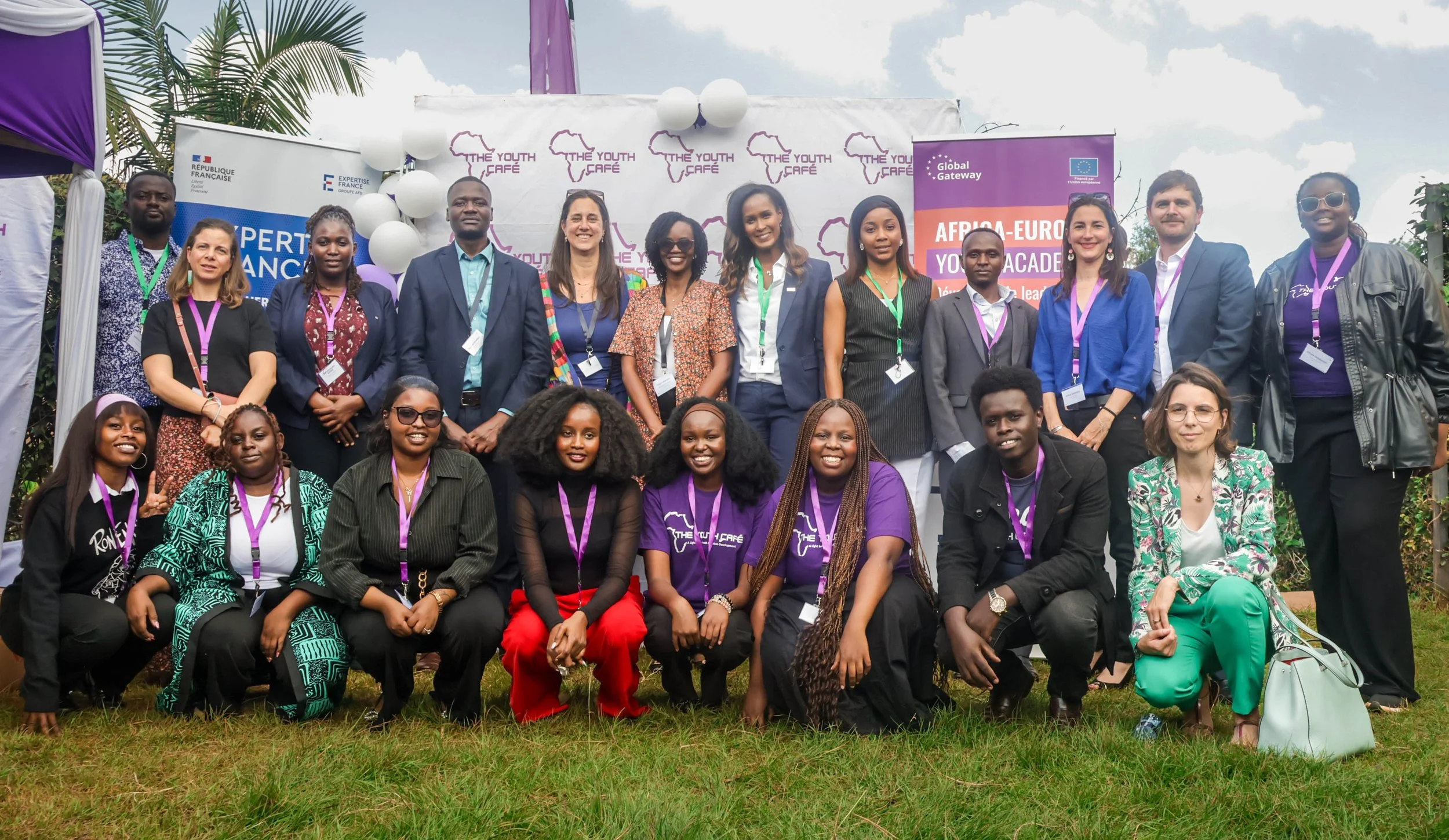
Round 1 Eligibility Requirements
Eligible Projects
Projects submitted must:
Establish or Strengthen a Space for Youth benefiting young people aged 18–30.
Run 6–12 Months
Be Implemented Locally — operate in one of the 11 eligible countries under Lot 2 or Lot 3.
Promote Inclusion — ensure meaningful participation of vulnerable youth, including young women, youth with disabilities, and those affected by conflict or climate change.
Indicative Targets:
- 50% Young Women among direct beneficiaries.
- 25% Vulnerable Youth including rural, displaced, unemployed, or marginalized youth.

Who can apply?
- Civil society organizations (CSOs),
- non‑governmental organizations (NGOs),
- associations, cooperatives,
- youth collectives,
- community networks.
MSMEs and start‑ups may also apply, provided they:
- Are legally registered and classified as micro, small, or medium enterprises.
- Serve a clear public‑interest purpose.
- Will not generate profit from the grant‑funded activities.
- Are not subsidiaries or controlled by large corporate groups.
Applicant Requirements
- Be legally registered, with proof of incorporation or equivalent documentation. Where applicable, and depending on the national legal context, an official receipt confirming that the registration application was submitted at least one (1) year before the submission deadline may be accepted.
- Be established in one of the eligible countries; Cameroon, Republic of the Congo, Democratic Republic of the Congo, Rwanda, Ethiopia, Kenya, Malawi, Mozambique, Tanzania, Uganda, and Zambia.
- Have a minimum of one year of legal existence prior to the submission deadline.
- Be apolitical, non‑partisan, and non‑discriminatory on the basis of religion, denomination, ethnicity, gender, or disability.
- Demonstrate financial accountability, with basic financial systems in place to manage grants responsibly.
Space for Youth Requirements
Each proposed Space for Youth may either be:
- Be youth‑led — at least 75% of governance members aged 18–30.
- Be youth‑focused — at least 75% of beneficiaries aged 18–30.
- Operate as non‑profit — no for‑profit objectives under the project.
- Be inclusive and apolitical — non‑partisan and non‑discriminatory.
- Meet AEYA definition — aligned with Section 5 of the Call.
Round 1 Selection Criteria
The evaluation will focus on:
Relevance — alignment with youth needs and AEYA objectives.
Impact — measurable benefits for youth aged 18–30.
Feasibility — realistic timeline, resources, and activities.
Youth Leadership — meaningful youth participation in governance and decision‑making.
Inclusion & Gender — engagement of women and vulnerable youth.
Innovation — creativity and potential for replication.
Sustainability — long‑term viability after funding ends.
Budget Coherence — logical link between costs and proposed results.
Round 2 Eligibility Requirements
Eligibility requirements
To qualify for Round 2 funding, organisations must:
Complete Round 1 — successfully implement all project activities.
Submit Reports — provide required narrative and financial documentation.
Show Accountability — demonstrate proper use of the €10,000 grant.
Comply with Standards — meet administrative, financial, and safeguarding requirements.
Engage in Training — attend all mandatory AEYA capacity‑building sessions.
Submit Scaling Plan — present a clear strategy or business plan for scale‑up.
Collaborate with Europe — show existing or prospective partnership with a European institution.
Demonstrate Capacity — prove strong financial and organizational management.
Selection criteria for Round 2 funding
Evaluators will assess proposals based on:
Implementation Quality — success and impact of Round 1 activities, including inclusion of vulnerable youth.
Scale‑Up Strategy — clarity, feasibility, and inclusiveness of the proposed growth plan.
Sustainability — potential for long‑term continuation, replication, and institutional strengthening.
Organisational Capacity — governance, staffing, and financial management to handle larger grants.
European Collaboration — relevance and added value of partnerships with European institutions.