
AU-ILO Youth Employment Strategy for Africa (YES-Africa)
Youth employment in Africa
Analysis of the situation of young people and the labour market
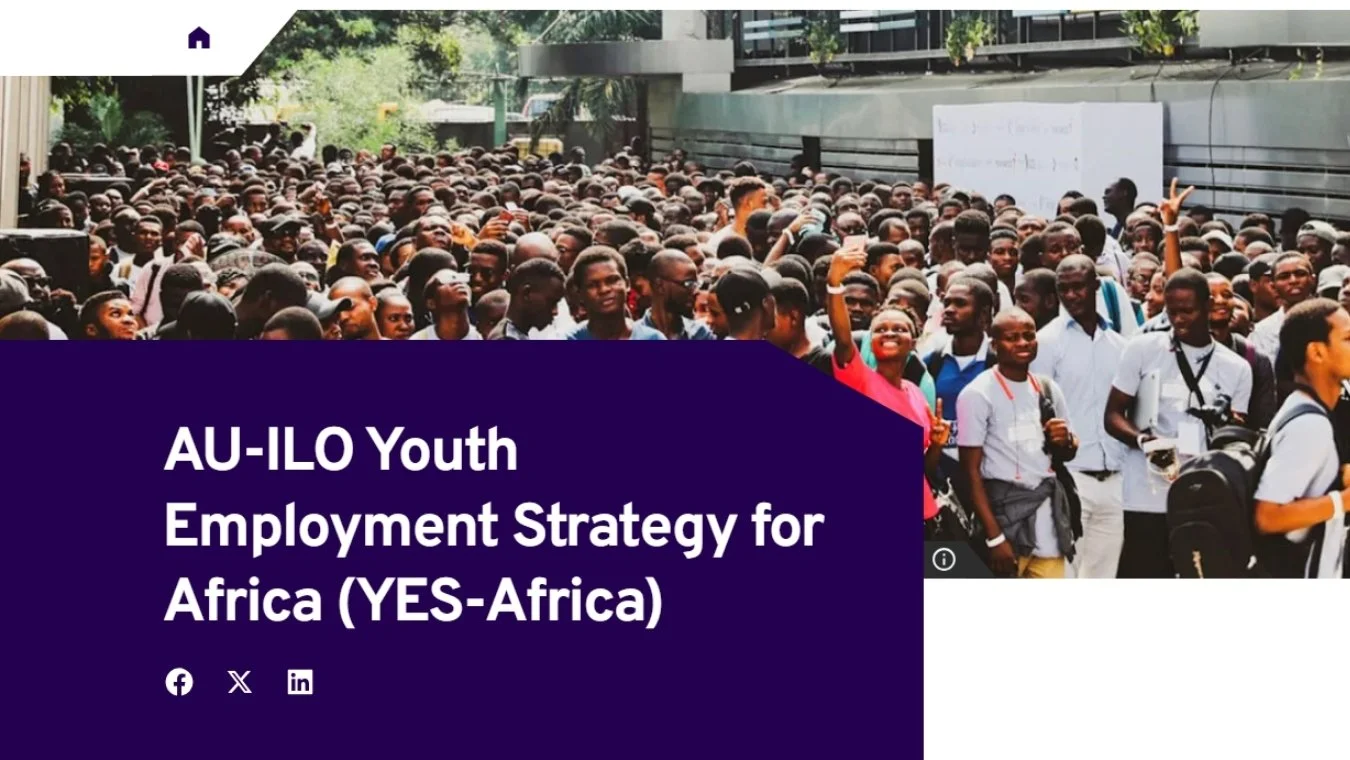
Africa is home to more than 1 billion people, half of whom will be under 25 years old by 2050.
With the world’s largest free-trade area, Africa should build on its expanded workforce to stimulate economic growth. Between 2000 and 2016, the continent experienced strong growth rates of 4.7 per cent per annum, although this growth has been neither homogeneous nor inclusive. For instance, reductions in levels of poverty and inequality were recorded in only 17 out of 49 African countries surveyed between 2000 and 2020.
Africa has the yungest population in the world, with an average age of just 19 years.
Over the next 20 years, at least 350 million young people2 will be of working age. By 2050, nearly one in three young people (15-24 years) will be of sub-Saharan African origin, and most of them will not be able to afford not to work.
While growth in number of jobs has tracked labour force growth over the past decades, the key challenge for youth entering the labour markets is the absence of productive and decent employment opportunities.
The average annual growth in jobs from 2000 to 2019 was 2.7 per cent, closely matching the labour force growth of 2.6 per cent, which is insufficient to create enough productive and decent jobs for the growing number of young entrants. In urban areas, most youth work in precarious, low-productivity informal jobs, earning low wages and unable to provide decent living conditions, leading to high poverty and vulnerability. While agriculture’s share of production and employment is declining, it remains dominant in rural areas, which experience seasonal unemployment and underemployment. Young people in these areas often work fewer hours, earn less, have fewer skills, and are generally less productive. The overall shortage of decent alternative jobs poses significant risks to social stability, including the likelihood that poor households may send children to work.
Megatrends that are shaping the present and future of work include climate change, recurring crises and increased risks of political or armed conflict, as well as demographic change and population growth, and the digital divide.
Digitalization is transforming the nature of labour markets, with as yet unknown consequences for potential job creation, job destruction and overall working conditions. These new challenges call for changes in patterns of production and consumption, involving the identification of new jobs and skills that are not always developed among young people.
Structural barriers to decent jobs for youth
The key underlying barriers because of which young people face difficulties in accessing decent and productive employment in Africa are:
Non-inclusive economic growth and the lack of job-conducive structural transformation:
Despite reasonably high levels of economic growth, economies have not been able to create enough productive jobs through a process of widespread structural transformation leading to higher value-added and more productive economic activities. Most people are employed in agriculture, which accounts for about 60 per cent of total employment. While economic growth is a necessary condition for youth employment creation, it needs to take place in a number of productive sectors with employment growth potential if it is to promote inclusive and sustainable development.
Failure to mainstream youth employment in sectoral and macro strategies:
Macro and sectoral strategies do not adequately target the creation of productive jobs. Employment outcomes are not meaningfully mainstreamed in national development planning, while macroeconomic, sectoral and labour market policies are not sufficiently geared to achieving the desired employment outcomes.
Mismatch of labour supply with the current and future needs of economies and the private sector:
The structural transformation of African economies, particularly at the sectoral level, depends on the availability of sector-specific skills to drive productivity and employ national youth, such as in agro-industry, product processing and preservation, renewable energy, and telecommunications infrastructure. Despite recent progress, the overall skills level of young people remains low: in 2021, only 43.3 per cent of youth in sub-Saharan Africa completed lower secondary education, and only 6 per cent across the continent benefited from technical and vocational education and training (TVET). Skills development systems remain poorly responsive to sectoral needs, with low employer engagement and limited work-based learning, while informal apprenticeships continue to dominate skills acquisition in many countries.
The strong presence of young people, particularly women, in the informal sector and other precarious jobs, accounting for 85 per cent of the workforce across Africa:
In 2019, 38 per cent of young African workers lived in extreme poverty (below USD 1.90 PPP per day) and a further 25 per cent of young workers in moderate working poverty (between USD 1.90 PPP per day and USD 3.20 PPP per day). 7 Formal wage labour is limited, restricted mainly to the higher service industries and the public sector. Moreover, manufacturing accounts for less than 5 per cent of total employment. Under these conditions, young people struggle to access decent jobs.
Inadequate internet access and poor connectivity, particularly in rural areas:
This problem is likely to hinder access to physical and virtual markets, and the creation of digital start-ups by young people, and consequently to restrict productivity. In 2022, roughly 36 per cent of Africans had broadband internet access. Africa has one of the widest digital gender gaps globally, the greatest disparity being between men and women using the internet (35 per cent versus 24 per cent in 2020).8 This digital gap also stems from significant affordability constraints, limited availability of locally relevant content and insufficient digital knowledge and skills
Poor access to decent jobs, essential infrastructure and economic opportunities, particularly for young women
in terms of: (i) development of self-driven local pharmaceutical industries, green circular economy, digital start-ups and so on); (ii) development of entrepreneurship, skills and employability in innovative sectors such as the circular green economy, the digital economy, industrial technology and artificial intelligence, agro-businesses; (iii) the migration of informal production units from small youth-run businesses to the formal sector; (iv) participation in community dialogue and decision-making on meaningful youth engagement.
AU and ILO policy frameworks and lessons learned for implementation
Building sustainable, innovative and people-centred economies and promoting productive youth employment is at the heart of Africa’s development agenda.
The African Union Agenda 2063 bolsters this priority as Aspiration 6, Goal 2 aims to achieve “Engaged and empowered youth in Africa through creating opportunities for Africa’s youth to achieve self-realisation, access to health, education and jobs”. To achieve its ambitious goals, the Agenda for Sustainable Development, in particular Goal 8, calls for a strengthened global partnership involving governments and the private sector. SDG Target 8.5 aims to “achieve full and productive employment and decent work for all women and men, including young people and persons with disabilities, and equal pay for work of equal value” by 2030.
Providing decent employment opportunities for African youth is a key priority for AU Heads of State, Governments and the African Union Commission.
This is evident in the continent-wide youth policies and instruments the AU has adopted over time. These include the African Youth Charter,10 the Youth Decade Plan of Action, the African Plan of Action on Youth Empowerment, the Malabo Decision on Youth Empowerment, the Ouagadougou +10 Declaration (adopted in 2014)11 on Employment, Poverty Eradication and Inclusive Development, all of which are implemented through various AU Agenda 2063 programmes. Similarly, at the 8th session of the AU Labour and Social Affairs Commission in 2022, ministers committed to achieving an accelerated reduction in youth unemployment of 2 per cent per annum by developing, financing and implementing Youth Employment Plans and a Youth Employment COMPACT.
Furthermore, the AU is implementing special initiatives, such as the One Million by 2021 Initiative (launched in April 2019) and its successor, the One Million Next Level Initiative (launched in 2022)
These are geared to catalysing action for youth development in Africa through employment, entrepreneurship, education, engagement and health, with a view to achieving the goals of AU Agenda 2063. Besides, the youth employment quota and gender parity, which are part of the AU reform agenda are aimed to promote youth employment. Moreover, the African Union (AU) and the International Labour Organization (ILO) have a long history of collaboration. Since 1965 with the signing of the first Agreement between the ILO and the Organization of African Unity. In 2022, this partnership was reaffirmed with the signing of Agreement between the AU and ILO, including on jointly promoting decent jobs for youth.
Similarly, the ILO has long identified youth employment as a critical labour market issue, globally and particularly in the African context.
At global level the ILO has set policy priorities on youth employment through a number of key documents adopted by its tripartite constituents, notably the ILO 2012 Resolution: The Youth Employment Crisis: a Call for Action that is implemented through the “Youth Employment Action Plan 2020-2030” and includes a strategy and workplan for the work of the organisation. In addition, the UN Global Initiative on Decent Jobs for Youth, hosted by the ILO since 2016, is a multi-stakeholder partnership developed to scale up action and impact on youth employment in support of the 2030 Agenda for Sustainable Development.
YES-Africa is also anchored to the ILO’s Youth Employment Action Plan for the period 2020– 30
The Plan considers today’s unprecedented economic and social situation, and the current and future needs of constituents in addressing the challenge of youth employment, while responding to an evolving world of work in the context of the ILO Centenary Declaration for the Future of Work
While the importance of investing in youth development is increasingly recognized in the region, past youth employment interventions at the policy and programme levels have not yielded the required results for a variety of reasons, including:
A lack of interventions targeting employment creation:
Many interventions do not fully consider the perspectives of young people
Youth employment interventions are often underfunded, fragmented, unipolar and devoid of a clear development path.
Weak coordination and fragmentation of initiatives and programmes at the global, regional and subregional (RECs) levels.
Uneven focus on the quality of employment and labour productivity
In most cases, there is no one-stop institutional set-up dedicated to youth employment creation, including careers guidance, promoting and providing training for youth entrepreneurship, and addressing the issue of sustainable youth livelihoods.
Vision, mission and objectives
The AU and the ILO recognize that the scale of the youth employment challenge in Africa requires a synergistic and systemic approach. As such, the Youth Employment Strategy for Africa (YES-Africa) complements existing global and regional frameworks and agreements by synthesizing them into strategic actions to accelerate the creation of decent jobs for youth in Africa.
Vision
All youth are empowered to transform their lives and communities through productive and decent employment for a sustainable and inclusive future in Africa.
Mission
To call upon African governments, social partners, development partners and other stakeholders to invest in and promote the creation of decent jobs for youth.
Objectives
YES-Africa is a guiding framework, calling for African countries and youth stakeholders to invest in the transformation of the world of work in Africa with a view to creating decent jobs for African youth and their integration into labour markets. It is a result of the collective expertise of the AU, the ILO and African constituents, as well as youth organizations and representatives. By recommending a set of priority actions across key policy areas, YES-Africa provides strategic guidance on the effective interventions needed to tackle the mounting youth employment challenges in the region. This strategy takes a continental approach and calls for the translation of its recommendations into country-level programmes and policies that take into account country-specific contexts.
YES-Africa is addressed to African policymakers and tripartite delegations from all AU Member States. It targets decision-makers and provides guidance on how to scale up action. In addition, it calls on youth-led organizations and youth representatives, as well as multilateral and bilateral development partners, to provide technical support and to invest in productive employment and decent jobs for young people.
The African Union will provide technical support, advise on and monitor the overall framework and consolidate the efforts of AU Member States with ongoing and upcoming youth-employment and youth-development initiatives in line with Agenda 2063 and other related frameworks.
African governments have a mandate to tackle youth employment, including the development and financing of vital youth employment interventions. Governments are implementing youth employment policies and programmes aligned with YES-Africa objectives, and are responsible for monitoring progress and periodically evaluating the impact of youth employment actions.
Workers’ and employers’ organizations are cooperating closely with governments to provide continuous feedback and to monitor YES-Africa’s recommended priority actions. Workers’ organizations promote young workers' rights, advocate for decent working conditions, and foster environments for skills-development and employment opportunities. Employers’ organizations ensure that the voice of the private sector is reflected, advocate for demand-driven approaches, and contribute to creating an environment conducive to competitive and sustainable enterprises.
The Regional Economic Communities will play an essential role in coordinating policy development and implementation at sub-regional level and fostering exchanges of knowledge between Member States and other stakeholders.
Youth-led organizations and youth representatives will ensure that youth perspectives are considered and reflected in programmes and policies, facilitate peer-to-peer learning, and lead and participate in policy advocacy, bringing innovative solutions to youth employment challenges.
United Nations Organizations provide technical assistance and capacity development support, conduct research and advocate for increased investment in decent jobs for young people. At the country level, they ensure that YES-Africa recommendations are reflected in UN frameworks and coordinate support through Resident Coordinator Offices and UN Country Teams.
Multilateral and bilateral development partners will continue to provide guidance and technical support, as well as financing the implementation of projects and programmes, and allocate resources for strengthening the capacities of national and local stakeholders.
Development banks will continue to play a crucial role by supporting governments, development partners, the private sector and other stakeholders in investing in social and economic development, providing additional financial resources for implementing youth employment projects and programmes.
Guiding principles
YES-Africa’s guiding principles are cross-cutting in nature, thereby providing nuanced guidelines for coherent and effective implementation across all thematic areas. These principles provide guidance on how all policy actions should be implemented. Thus, when implementing youth employment policies and programmes, due consideration must be given to all the principles involved.
Social justice and socio-economic inclusion
YES-Africa places particular emphasis on furthering social justice, equity and inclusion within and among African countries. A cornerstone of promoting social justice in the context of youth employment interventions is to ensure that young people from diverse backgrounds benefit from the increased decent jobs opportunities made available. Action based on YES-Africa’s recommendations must therefore adopt a targeting strategy that is both evidence-based and impact-oriented. This includes a "Pro-Poor and Leave No One Behind (LNOB)" approach to ensure that the most vulnerable youth populations, in particular women, persons with disabilities, regular migrants, refugees, internally displaced persons (IDPs) and those in the informal economy as well as in fragile and conflict-affected settings are given priority.
By concentrating on rural economies and diaspora communities, the strategy aims to dismantle barriers that perpetuate inequality and limit the potential of young people in these segments. Furthermore, intersectionality is recognized as a key principle in understanding the overlapping factors that contribute to vulnerability, such as gender, socio-economic status and geographical location.
Political will, shared responsibility and mutual accountability
Political will is a critical factor in ensuring the effective and comprehensive implementation of any youth employment strategy. YES-Africa supports efforts to increase the buy-in and ownership of political leaders at the national and continental levels, and make youth employment central to policy and investment decisions. YES-Africa also promote the values of good governance, transparency and accountability, as well as social solidarity. Furthermore, the strategy supports Member States, national constituents, continental and regional organizations and development partners in assuming joint responsibility and making themselves accountable to youth.
Pan-Africanism
YES-Africa acknowledges the centrality of Pan-Africanism for developing and implementing continental policy frameworks, not only so as to achieve a unified approach to youth employment but also to envision young people as pivotal agents of change standing in solidarity across the continent. YES-Africa aims to empower young Africans to participate in shaping their own futures and those of their communities, transcending borders and cultural barriers. The strategy acknowledges that solutions to the continent's challenges can best be found when its young people are united in purpose and action. It seeks to facilitate platforms for cross-border youth dialogue, collaboration, volunteering and innovation, thereby harnessing the collective strength and creativity of Africa's present and future leaders.
Gender-responsiveness
YES-Africa is committed to advancing gender-responsive policies and practices as an integral component of its overarching strategy. This involves a comprehensive, evidence-based approach to identifying and addressing structural inequalities and challenges that affect both young men and women in the African labour market. YES-Africa promotes targeted actions designed to dismantle gender-specific barriers to employment, including advocating for equal pay for equal work, addressing and preventing violence and harassment, fostering women's entrepreneurship and enhancing access to sectors traditionally dominated by men. Such targeted interventions aim to level the playing field and are supported by metrics that enable the monitoring and evaluation of gender outcomes. Moreover, YES-Africa advocates for collaboration between governmental bodies, civil society organizations, and other stakeholders in mainstreaming gender perspectives in national and regional youth employment dialogues.
Inclusive social dialogue
Building on tripartism as a comparative advantage of both the ILO and the AU, the established mechanisms of social dialogue bring together the main actors of the world of work in Member States to progress youth employment priorities. It is vital to ensure that social dialogue is conducted with and for young people, amplifying their voice in existing social-dialogue structures by having youth at the table, engaging in consultation with youth structures and ensuring that youth issues are raised. Additionally, other inclusive and innovative forums for both youth-to-youth and inter-generational dialogue should be strengthened and supported, underlining the diversity of youth groups.
Meaningful youth participation, engagement and leadership
YES-Africa prioritizes the meaningful involvement of young people in the full cycle of employment interventions, from design to governance, implementation and evaluation. Young people know their needs and priorities and can best represent their own interests. Importantly, young people in Africa expect and have the fundamental right and potential to be meaningfully involved in the decision-making processes that impact their lives. Meaningful youth engagement includes increasing youth representation in continental and national dialogues on creating productive and decent employment opportunities, and recognizing young people as leaders and partners in implementing youth employment policies, programmes and projects. It also means strengthening the capacities of youth organizations to bring innovation to the scaling up of decent job creation activities. Meaningful youth engagement requires the allocation of sufficient, reliable and sustainable financial resources.
A human-centred, rights-based and non-discriminatory approach
YES-Africa adopts a human-centred, rights-based, and non-discriminatory approach to ensuring that young people are at the core of all initiatives. This integrated perspective values youth as unique individuals with distinct capabilities, while guaranteeing their fundamental rights. Consequently, YES-Africa commits to the non-discriminatory inclusion of all youth, while focusing on the most vulnerable, such as regular migrants, refugees, those with disabilities.
Environmental sustainability and just transitions
Recognizing the environmental wealth of Africa as a crucial asset for sustainable development, YES-Africa advocates for just transitions for youth. The strategy focuses on turning environmental challenges into opportunities and preparing young people for the ongoing transitions in green and blue sectors, thus ensuring the long-term sustainability of employment gains. YES-Africa recognizes that without preserving the environment, any gains in youth employment will be shortlived.
An innovative, coherent and integrated approach
. At the national including at sectoral levels, YES-Africa aims for coherence by aligning new and existing policies, actions and initiatives that focus on productive job creation for youth, thus avoiding duplication and optimizing the impact of the resources invested. Such coherence can be orchestrated by integrating operational frameworks and involving governing bodies such as national councils and parliaments, as well as sectoral inter-ministerial committees. Innovation can be fostered by capitalizing on best practices and confronting structural constraints.
An evidence-based and impact-oriented approach
. The YES-Africa strategy firmly adheres to an evidence-based and impact-oriented approach, ensuring that all interventions are rooted in empirical evidence and aimed at achieving measurable outcomes. This involves systematic harmonized and participatory collection, analysis and utilization of relevant data to identify and advocate for specific needs, challenges and high impact opportunities within the youth employment landscape.
Priority areas and actions
Creation of decent and productive employment for young people
.Across African economies and labour markets, there is a considerable shortfall in productive and decent employment opportunities for youth. This is the central and most significant challenge for youth employment across the continent.
Fundamental starting point: Identify decent and productive employment creation opportunities
YES-Africa recommends that all youth employment policies, programmes and initiatives undertaken in Africa adopt the creation of decent and productive employment opportunities for youth as their fundamental starting point.
Economic and employment initiatives should aim to contribute directly to the creation of decent and productive employment for youth by spurring the structural transformation of African economies and responsibilities of the government in terms of the legal frameworks and investments. Enhancing skills in line with national development needs and priorities as well as innovation within enterprises and sectors are key prerequisites to stimulating growth and new business set-ups.
Successful implementation of all YES-Africa priority actions necessitates a demand-driven approach that defines critical areas in which to create decent jobs for young people. Job creation refers to both the preservation of existing jobs, creation of new productive employment opportunities for youth and to enhancing the productivity and quality of existing and future employment to improve incomes and working conditions as part of a transition to formality and decent work for all.
Decent and productive employment opportunities must be created for all subgroups of youth. Youth is not a homogenous category and young people’s needs differ. This calls for inclusive dialogue and consultation, research and the leveraging of best practices, with close attention and support devoted to disadvantaged youth, enabling them to take up new productive employment opportunities.
Priority areas
Structural transformation and sectoral approach
Transitioning from low to high productivity generally and in specific sectors is critical for the continent’s economic development and social progress. Bringing about structural transformation is a long-term commitment, one that requires a multifaceted and inclusive approach, engaging various sectors and stakeholders in driving economic growth and social development.
Priority Action 1: Develop and implement pro-youth employment policy frameworks
AU/ILO Member States need to develop and strengthen pro-youth employment policies, laws and action plans for sustainability that mainstream youth employment goals across sectors, as well as in national employment policies and action plans.
Pro-employment macroeconomic policy-making and pro-employment budgeting are particularly important in facilitating the promotion of youth employment. This can be achieved by integrating youth employment objectives into macroeconomic policies, particularly on the part of ministries concerned with finance, economic development and sectoral affairs. A whole-of-government approach encourages the institutionalization of pro-employment measures in economic policies, budgeting, monitoring and reporting on results regularly, taking into account the challenges faced by young people, especially young women in accessing decent work.
In developing pro-employment policy frameworks, multi-stakeholder engagement is imperative. Policies should be developed and implemented in close consultations with workers' and employers' representatives, as well as through meaningful engagement with young people.
Priority Action 2: Prioritize the development of sectors with high youth employment impact
Countries should identify and develop sectors with high-employment impact, in terms of their ability to drive both productivity and employment growth. Traditional sectors such as agriculture and manufacturing are still promising, while non-traditional sectors connected to the green, blue, orange and digital economies have the potential for higher quality youth employment and will be key drivers of structural transformation. Selecting sectors that provide opportunities for re- and upskilling is likely to yield additional benefits in the form of spill-over effects.
A key objective of driving structural transformation at the sectoral level is to increase productivity, particularly labour productivity, while focusing on the quality of employment and the livelihood opportunities created. Both public and private investment needs to be incentivized and maximized in these job-rich sectors through targeted investment, supportive regulatory measures and inclusive dialogue. Sectoral skills development strategies will foster structural transformation by identifying skills needs in key occupations, strengthening governance and financing arrangements, and integrating with other relevant policies.
Economic integration: investment, trade and labour migration
To create decent work opportunities for young people at scale, it is necessary to deepen economic integration across the continent. Strategic partnerships between governments and the private sector are crucial for boosting youth employment. This strategy recognizes the transformative potential of the African Continental Free Trade Area (AfCFTA) in facilitating higherproductivity jobs and the significant impact of remittances and diaspora contributions to youth employment. Similarly, fair and regular labour migration of young African workers can contribute to more and better job opportunities.
Priority Action 3: Incentivize private investment that prioritizes youth employment creation
Private businesses are primary engines of productivity, driving inclusive economic growth and creating decent employment opportunities for youth. Creating enabling environments that encourage private investment in sectors likely to employ young people requires concerted effort from governments, private-sector entities, social partners and development partners. Measures include incentives such as tax breaks, subsidies and preferential loans, direct support to young entrepreneurs, mentorship programmes, entrepreneurship education, training and skilling programmes, start-up incubators, and business training schemes. Private-sector entities should also be encouraged to invest in youth-centric businesses to create both direct and indirect employment opportunities.
Private-sector efforts can be enhanced by prioritizing investments that maximize youth employment and promoting responsible business practices. Governments should simplify business registration and create an enabling environment for innovation, including capacity-building and knowledge-sharing initiatives in areas such as intellectual property, trademarks and copyright.
Priority Action 4: Boost public investment and employment promotion programmes
Working with development partners, governments need to place youth employment at the centre of their public investment strategies and policies, for example by favouring businesses that promote youth employment and supporting youth-led enterprises in participating in government projects and tenders.
Strengthening rural-urban linkages and promoting territorial development by providing adequate public goods and infrastructure, such as access to land, will expand profitable farm and non-farm employment opportunities.
Pro-employment macroeconomic policy measures, such as public employment programmes (PEPs), serve as practical tools for job creation, especially in rural and peri-urban areas. Public investment in sectors with high job-creation potential, including manufacturing, agriculture, and the green and blue economy, should be prioritized, integrating skills development and certification, sustainable utilization of local resources, and preference for locally manufactured materials.
Social partners and youth organizations should advocate for these policies, access budget information, monitor implementation, hold governments accountable, and provide on-the-ground insights to ensure policies effectively address the needs of young people.
Priority Action 5: Progress employment-responsive trade integration
All stakeholders should expedite full implementation of the AfCFTA and other trade protocols to enhance intra-African trade and create job opportunities for youth, ensuring that trade integration is guided by labour market institutions with employment protection regulations safeguarding working conditions and vulnerable youth.
Governments play a central role in developing and enforcing labour market policies that protect young workers, ensure fair wages, and promote decent working conditions, while steering the economy towards sectors with high-value addition and employment potential. Private-sector entities can contribute by aligning with the AfCFTA, collaborating with youth-led businesses, and supporting young entrepreneurs in navigating the single market.
International and regional organizations and stakeholders should provide technical assistance, capacity building, and financial support to help establish trade policies that boost youth employment and support the development and implementation of labour market policies. African businesses run by young people need support to better face international competition.
Priority Action 6: Maximize the benefits of youth labour migration
Young migrant workers contribute to growth and development in their countries of destination, while countries of origin benefit from their remittances and the skills acquired abroad. However, migration involves complex challenges in governance, migrant worker protection, the linkage between migration and development, and international cooperation.
Governments need to implement policies that facilitate fair and demand-led labour migration, both internal and external, while providing protection against human trafficking and other exploitative practices, supported by continental labour-migration initiatives and employment services. A common legal framework is required to guarantee the rights of labour migrants and provide information for regular migrants. Regional collaboration can expand cross-border employment opportunities in priority sectors, with mutual recognition of skills and qualifications, and promote employment creation, fair wages, and inclusive treatment of forcibly displaced youth.
Just transitions to inclusive, green and digital economies
The structural transformation of African economies has the potential to significantly improve the job prospects of young people, provided that transitions to higher-value-added sectors are just and human-centred.
The transition to green, blue and digital economies must place social justice at the heart of these changes, creating more and better jobs for young people and managing the shift from informal to formal employment carefully to avoid disadvantaging informal businesses and workers.
Young people act as a driving force in these transitions, serving as agents of green, blue and digital innovation. Transformation processes should ensure equity and inclusivity, minimize hardship, and leave no one behind.
Priority Action 7: Ensure policy coherence and scale up investment in green, blue and digital transitions
Countries identifying digital, green and blue transitions as key development opportunities should set goals in national development and sectoral strategies for decent job creation, youth employment, reskilling and upskilling, embedding considerations of job quality and social justice in policy frameworks that promote just transitions.
Green, blue and digital transitions affect employment across the whole economy. Some new occupations are emerging, such as energy advisors, recycling technicians, content creators and cloud managers, while most existing jobs require new skills to integrate green, blue and digital technologies. Maximizing digital transformation requires investment in innovation across all sectors, including cross-cutting growth drivers such as e-commerce.
Greater investment is needed to up- and reskill young people, incorporating digital, blue and green-job skills in educational curricula and incentivizing continuous professional development. Access to affordable internet is essential, and particular attention is needed to include young people from disadvantaged backgrounds. Such investment aims to increase and diversify incomes, stimulate new economic activities, consolidate value chains, and expand agro-industries.
Priority Action 8: Manage the disruption caused by transition processes by providing robust protection mechanisms for young workers
Countries need to mitigate the potentially disruptive effects of structural changes, emphasizing equity and inclusivity through tripartite and youth-inclusive dialogue that allows affected young people to express their aspirations, needs and challenges. Social dialogue should be prioritized and strengthened, particularly in the digital and gig economy.
Human-centred frameworks regulating employment in the digital and platform economy are needed to clarify employment status, ensure data privacy, promote fair wages, and apply social dialogue mechanisms. Enhanced social protection and robust occupational health and safety systems are essential in green, blue, and digital sectors, including retirement benefits, health care, and specialized initiatives like climate insurance for youth-led businesses.
Up- and re-skilling initiatives and transition programmes must ensure that no one is left behind, creating agile, sustainable and well-financed lifelong learning systems. Compensation mechanisms should be provided for those who face job or revenue losses as transitional policies take effect.
Labour market policies
Labour market policies implemented by robust and well-coordinated institutions play a crucial role in managing transitions into decent work, safeguarding working conditions, and protecting vulnerable youth. Context-driven labour market programmes, backed by adequate financial resources, can significantly improve the employment outcomes of young people.
As decentralization and localization of development increases across Africa, leveraging local insights, including those of young people, can yield significant benefits. Labour market institutions, together with local governance structures, are crucial in promoting decent jobs for youth, particularly when focusing on innovative reforms and effective youth-inclusive social dialogue.
Priority Action 9: Adopt youth-targeted active labour market programmes
Active Labour Market Programmes (ALMPs) encompass training and re-training, including the enhancement of technical and core skills, incentives for start-ups, careers guidance, promotion of small and medium-sized enterprises, employment services, public works, and wage and hiring subsidies. Multi-pronged programmes targeting young people from disadvantaged socio-economic backgrounds are particularly impactful.
To maximize ALMP effectiveness, service delivery networks should include local governments, youth organizations, and workers’ and employers’ organisations, ensuring proper coordination and programme coherence. Improving digital infrastructure and access to digital delivery mechanisms, such as e-employment platforms and job services via smartphones, enhances accessibility. ALMPs should also be promoted within decentralization and local development plans, with opportunities for rural public employment in infrastructure maintenance, reforestation, road development, and other community-focused activities.
Priority Action 10: Enhance employment services for youth
Ensuring strong and effective employment services, particularly public employment services (PES) and specialized services for young people, is critical for labour market coordination and promoting full and productive employment. An enabling policy and legal environment is necessary to expand outreach and access, promote labour market inclusiveness, and prepare young people adequately, including refugees and IDPs.
Strengthening the capacities of public and youth employment services will enable them to offer integrated ALMPs and income support programmes. Services should profile, target, and segment young people to provide customized support based on aspirations, skills, education, and vulnerabilities. Modern marketing strategies and digital tools are key for visibility and effectiveness, with additional efforts to ensure affordable access for rural and less developed areas.
Financing of employment services requires deliberate macroeconomic measures to create fiscal space. Parliamentarians should include provisions for youth employment services in national budgets. Funding sources should be diversified, including national and local public budgets, unemployment insurance, development partners, private donations, and a national youth employment fund.
Skills development and youth economic empowerment
Addressing the mismatch between skills training and labour market demands, as well as equipping young people with the employability, entrepreneurial and life skills as well as resources to transition from training to employment, is crucial in promoting decent jobs. YES-Africa aims to close these gaps by fostering an ecosystem where quality training meets labour market needs and the transition from education to employment including through volunteering is supported by meaningful interventions.
Priority Action 11: Expand demand-driven and inclusive skills development strategies and systems
A major challenge in promoting decent jobs for youth in Africa is the gap between taught skills and labour market demands. Skills anticipation methods and tripartite skills governance at national, sectoral, and local levels, including skills qualification frameworks, are important. Demand-driven skills development should go beyond conventional education to provide practical training, targeting both urban and rural youth, including tailored agricultural extension services and access to finance.
Increasing budget allocations for education and training will expand access to quality education, modernize facilities, and be more inclusive. Up- and re-skilling programmes should be complemented by measures such as grants, flexible admissions, training leave, and training vouchers. Public-private partnerships and financial mechanisms can leverage investment in skills.
Private-sector involvement is vital, as businesses are end users of skills and can provide insights into labour market needs. By cooperating with higher education institutions and TVET actors, the private sector can help set skills standards and shape relevant curricula.
Guided by the ILO Recommendation on Quality Apprenticeships (Recommendation 208), the private sector can provide quality apprenticeships and work-based learning to bridge theory and practice. Apprenticeship systems in the informal economy should be upgraded, including improving training quality and working conditions, ensuring skills recognition beyond local communities, upskilling trainers, and promoting young women’s access to non-traditional occupations. Recognition of Prior Learning (RPL) enables informally acquired skills to gain formal qualifications, improving employability, mobility, lifelong learning opportunities, social inclusion, and self-esteem.
Priority Action 12: Support and grow youth enterprises
Young entrepreneurs in Africa are agents of change, innovation, and social and economic progress. To promote youth-led enterprises, including in the social and solidarity economy, entrepreneurship, business, life, and soft skills training should be integrated into TVET and higher-education frameworks, with support for establishing business incubators.
Limited access to finance is a major barrier for youth enterprises. Partnerships with financial institutions are needed to design youth-tailored loans and grant programmes, including lower interest rates, relaxed collateral requirements, mentorship, crowdfunding, and regulated peer-to-peer savings and lending groups, while reducing regulatory and licensing burdens.
Promoting youth enterprises requires system-level interventions to make markets more accessible and fair. Supporting incubators, accelerators, and innovation hubs provides platforms for innovation, networking, and scaling. Governments should allocate funds for youth innovation, review formalization procedures, simplify business registration, and leverage digital technologies to support business formalization.
Cross-cutting enablers
Implementation of priority action will also need to rely on effective partnerships, sufficient resources and high-quality data and evidence. Therefore, YES-Africa identifies three strategic enablers that underpin its priority actions:
Advocacy and partnerships
Resource mobilization and financing: domestic and international
Research, data, monitoring and evaluation, and communication
Advocacy and partnerships
Advocacy efforts are critical for communicating the need to invest in youth employment policies and programmes, showcasing the impact of ongoing initiatives, and scaling up successful programmes through effective partnerships among youth employment stakeholders.
AU/ILO Member States are encouraged to invest in advocacy and communication of youth employment policies and programmes, paying special attention to vulnerable groups:
Use influential institutional platforms, including the AU and national youth councils, to amplify youth concerns and experiences.
Leverage popular, technology-based platforms and engage legitimate youth e-champions, including digital influencers and creative industries, to amplify advocacy messages with young people at the center.
Advocating for increased investment in decent jobs for youth requires a multi-stakeholder effort, including governments, social partners, youth organizations, development partners, public institutions, and educational and TVET institutions. Effective partnerships can be strengthened by:
Tapping into the Global Initiative on Decent Jobs for Youth network of over 80 youth-focused UN agencies, development partners, civil society organizations, and research institutions.
Utilizing United Nations Sustainable Development Cooperation Frameworks (UNSDCFs) to highlight broader societal benefits, such as peace and security.
Partnering with non-traditional stakeholders, including youth networks and volunteer organizations, to provide technical support and facilitate peer-to-peer learning.
Resource mobilization and financing
Fulfilling the aspirations of YES-Africa requires adequate resources and financing. A well-structured, comprehensive financing approach is essential for creating an enabling environment that facilitates decent and sustainable employment for African youth. Scaling up and diversifying resource mobilization is critical for implementing the Strategy’s priority actions.
Resource mobilization and increased financing are required at both domestic and international levels:
Domestic level: Pro-employment budgeting ensures national governments commit resources to YES-Africa priority areas. Fair, transparent, and sustainable fiscal policies can generate resources earmarked for youth employment. The diaspora can also contribute, requiring partnerships between ministries of employment, youth, education, and finance to link sector investments to youth employment promotion.
International level: Development partners—including bilateral donors, multilateral agencies, and multinationals—should provide resources and co-create programmes linking YES-Africa action areas to country and partner priorities. Implementation requires broad partnerships involving the private sector, UN agencies, multilateral partners, and development banks, with tailored engagement plans to secure long-term financial commitments.
Development financing for youth employment should be diversified, including greater involvement of private-sector actors. Through corporate social responsibility initiatives, strategic investments, and Public-Private Partnerships (PPPs), the private sector can provide financial resources and innovation to promote decent jobs for young people in Africa.
Research, data and knowledge management
Data and research should underpin, shape, and inform policy advice for promoting decent jobs for youth in Africa. Quality, up-to-date, and disaggregated data is essential for designing effective interventions, yet current data is often inadequately disaggregated, and weak statistical systems hinder evidence-based policy-making.
Quality labour market data must be harmonized, analyzed, and applied to be useful for advocacy, policy-making, monitoring, and accountability. Necessary actions include:
Strengthening the data ecosystem for youth employment within the African Statistical System, with primary reporting at national and continental levels.
Harmonizing data and providing authoritative information at the country level, ensuring official statistics are accessible to governments, businesses, and the public.
Designating focal points on youth employment data in national governments to coordinate and manage data collection, supported by RECs.
Encouraging data users and producers to develop youth-relevant, country-specific indicators.
Leveraging new technology to streamline data production and analysis, improving evidence-based decision-making, boosting statistical literacy, and mobilizing adequate funding for compiling continental youth-employment statistics and research.
YES-Africa: a call to action
The youth employment challenge: Africa, with over a billion people, will have the youngest population globally by 2050, with more than half under 35. This presents both challenges and opportunities, as uneven development persists despite notable growth.
Labour market challenge: The most pressing issue for young people is the lack of productive and decent employment opportunities. Job market growth has not kept pace with the expanding workforce, leaving many in precarious, low-productivity informal jobs, exacerbating working poverty and threatening social stability.
YES-Africa: a strategic response: AU Member States, social partners, and youth representatives collaboratively developed YES-Africa to integrate and enhance existing frameworks and expedite the creation of decent jobs for African youth.
Vision and mission: YES-Africa aims to empower all youth to transform their lives and communities through productive and decent employment, fostering a sustainable and inclusive future for Africa. Its mission calls on governments, social partners, and stakeholders to invest in and promote the creation of these jobs.
Fundamental starting point: The central tenet of YES-Africa is that creating productive employment opportunities is the foundation of all youth employment policies and programmes. The Strategy emphasizes demand-driven initiatives that spur structural transformation and identify critical areas for decent job creation, furthering social justice.
Priority actions: Across five key policy areas, YES-Africa outlines twelve priority actions:
Develop and implement pro-youth employment policy frameworks.
Prioritize sectors with high youth employment impact.
Incentivize private investment that prioritizes youth employment.
Boost public investment and employment promotion programmes.
Progress employment-responsive trade integration.
Maximize benefits of youth labour migration.
Ensure policy coherence and scale up investments in green, blue, and digital transitions.
Manage disruptions from transitions with robust protection mechanisms for young workers.
Adopt youth-targeted active labour market programmes.
Enhance employment services for youth.
Expand demand-driven and inclusive skills development strategies.
Support and grow youth enterprises.
A call to action: YES-Africa calls on governments, social partners, development partners, youth organizations, and other stakeholders to commit to transforming the world of work in Africa. It emphasizes collaborative and innovative approaches, positioning youth as key drivers of a resilient and diverse economy.
Invitation to all actors: YES-Africa urges all actors to contribute to ensuring Africa’s youth reach their full potential, creating sustainable and inclusive economies and societies. Investing in youth employment is an investment in Africa’s future.