
Africa-France Partnership for Growth and Innovation
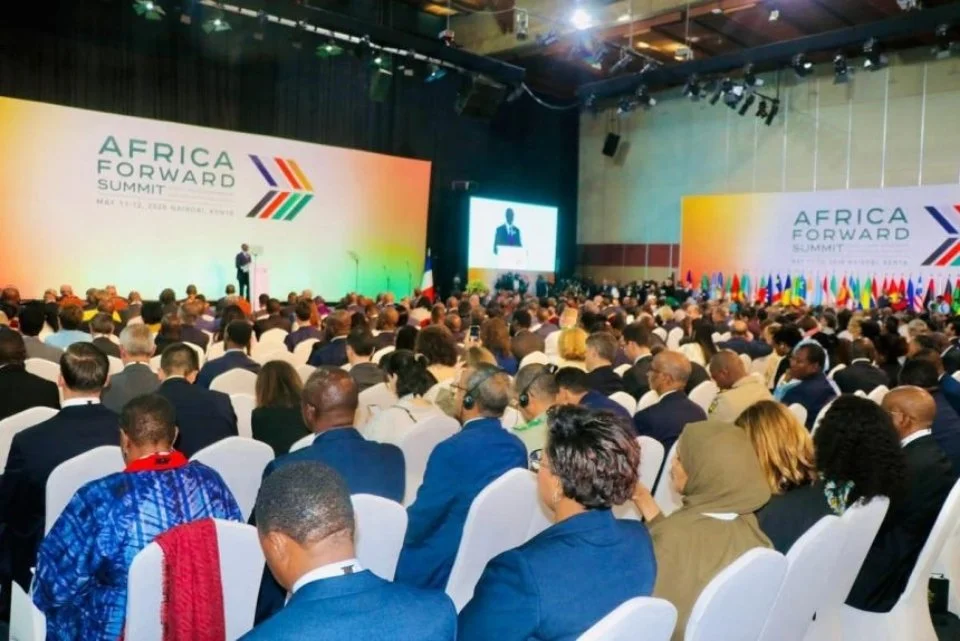
On 12th May 2026, representatives of African nations and the French Republic convened in Nairobi, Kenya, for the Africa Forward Summit under the theme “Africa-France Partnership for Growth and Innovation.” The summit reaffirmed a shared commitment to sustainable development, inclusive growth, resilient economies, and a rules-based international order grounded in the principles of the United Nations Charter. Participants acknowledged Africa’s immense potential as a driver of global growth, innovation, and prosperity, while emphasizing partnerships based on mutual respect, shared responsibility, and co-development.
1. Strengthening Peace, Security and Strategic Autonomy
The declaration acknowledged the evolving global security environment and emphasized the relationship between peace, security, and sustainable development.
Affirm the principles and objectives of the African Union Constitutive Act, promoting unity, peace, security, good governance, democratic elections, and cooperation among member states.
Support African-led peace and security solutions through the African Union Peace and Security Architecture (APSA) and implementation of UN Security Council Resolution 2719.
Identify renewed avenues for cooperation against terrorism, cyber threats, trafficking, illicit flows, organized crime, and transnational threats.
Strengthen Africa’s strategic autonomy, resilience, and collective security capacities.
Advance dialogue on geopolitical fragmentation, economic volatility, and weakening multilateral consensus.
Strengthen institutional capacities in conflict-affected regions including the Horn of Africa, Great Lakes region, and the Sahel through inclusive dialogue and regional stabilization.
Link security with inclusive economic growth, youth empowerment, education, climate resilience, and diaspora engagement.
Support reform of the United Nations Security Council for equitable African representation.
2. Advancing Sustainable and Value-Added Agriculture
The declaration emphasized transforming agriculture into a modern, competitive, and climate-resilient sector.
Promote productive, sustainable, and resilient agriculture and food systems.
Encourage agricultural and livestock systems that improve nutrition and integrate the One Health approach.
Strengthen food systems, livestock productivity, rural economies, and fertilizer supply chains.
Invest in agricultural research, innovation, climate-smart practices, and joint research partnerships.
Strengthen agricultural education and youth integration into labour markets.
Promote agricultural value chains, agro-processing, logistics, and trade under the African Continental Free Trade Area (AfCFTA).
Empower youth, women, and smallholders through finance, land tenure, digital tools, and innovation incubators.
Strengthen food security, nutrition, and rural-urban economic linkages.
Improve resilience of agriculture and food systems against climate, environmental, and geopolitical challenges.
Support implementation of the Africa Fertilizer and Soil Health Action Plan 2024–2034.
Mobilize public-private investment for agro-industrial parks and value chains.
3. Building Resilient Health Systems
The summit recognized resilient health systems as essential to human security and development.
Advance Universal Health Coverage (UHC) and people-centered health systems.
Enhance pandemic prevention, preparedness, surveillance, and laboratory capacity.
Collaborate on climate and health initiatives through the One Health approach.
Accelerate regional production of vaccines, medicines, diagnostics, and medical technologies.
Support the African Pooled Procurement Mechanism (APPM) to improve access to health products.
Strengthen and harmonize regulatory frameworks for health products.
Promote equitable access to advanced technologies and innovation.
Mobilize sustainable financing for resilient health systems.
Invest in workforce development, digital health, and climate-resilient health infrastructure.
Build health sovereignty through regional manufacturing and resilient supply chains.
Promote joint research, innovation, and equitable global health cooperation.
4. Powering Growth Through Green Industrialization and Energy Transition
The declaration affirmed that reliable, affordable, and sustainable energy is central to Africa’s development agenda.
Promote green industrialization through renewable energy and low-carbon systems.
Strengthen energy security and local clean energy value chains.
Expand access to clean energy and clean cooking solutions.
Encourage electrification across sectors to support the green transition.
Facilitate technology transfer and workforce development for green jobs.
Strengthen national grids and regional energy connectivity.
Promote local beneficiation and sustainable processing of critical minerals.
Strengthen regional value chains and “Made in Africa” production.\
Prioritize renewable energy for irrigation, agro-processing, and fertilizer production.
Leverage partnerships such as AGII and APRA for financing and coordination.
Advance fair climate and sustainable development financing.
Support implementation of the Paris Agreement and a just energy transition.
5. Unlocking the Blue Economy
The declaration recognized the Blue Economy as a strategic frontier for growth and sustainability.
Promote a sustainable blue economy grounded in maritime sovereignty and climate resilience.
Strengthen Africa-France cooperation in maritime security and trade.
Support African-led maritime cooperation frameworks and ocean governance.
Ensure cooperation respects national sovereignty and international law.
Strengthen maritime domain awareness and action against piracy and illegal fishing.
Support a just global shipping transition aligned with the Paris Agreement.
Encourage investments in maritime economies and blue carbon ecosystems.
Support long-term strategies addressing climate change and rising sea levels.
Promote equitable access to finance, technology, and maritime infrastructure.
Encourage ministers and authorities to advance cooperation under the declaration.
Strengthen resilient trade corridors and sustainable ocean prosperity.
6. Harnessing Digital Transformation and Artificial Intelligence
The summit recognized digital transformation and artificial intelligence as major drivers of economic and social change.
Advance inclusive and rights-respecting digital transformation and AI systems.
Close digital divides affecting women, youth, rural communities, and underserved populations.
Invest in resilient digital and AI infrastructure.
Strengthen digital sovereignty and African-led ownership of data and AI systems.
Support African language models, local datasets, and open-weight AI systems.
Strengthen skills development, research collaboration, and innovation ecosystems.
Promote co-investment and co-governance among African and French institutions.
Advance ethical and pro-innovation AI governance frameworks.
Strengthen digital trade and interoperability under the AfCFTA Digital Trade Protocol.
Promote responsible use of AI within the creative economy while protecting African intellectual property.
Strengthen international cooperation against misinformation, cyber harms, and AI-related risks.
Promote Africa’s strategic autonomy in the AI age.
7. Reforms in the International Financial Architecture
The declaration called for reforms in the global financial system to better support Africa’s development priorities.
Support realignment of IMF quota shares in favor of underrepresented countries.
Secure enhanced African representation on the IMF Executive Board.
Align international financing flows with Agenda 2063 and the Sustainable Development Goals (SDGs).
Mobilize development finance from public and private sources.
Ensure concessional funding availability through the International Development Association (IDA).
Improve the global debt architecture and implementation of the G20 Common Framework.
Deploy the SDG Stimulus to promote long-term debt at lower interest rates.
Enhance implementation of the Addis Ababa Action Agenda and Sevilla Financing for Development outcomes.
Promote a fair and inclusive global tax system that addresses illicit financial flows and tax evasion.
8. Investing in People, Skills, and Innovation
The declaration recognized Africa’s youth as a strategic asset.
Expand education, training, and skills development.
Support innovation ecosystems and entrepreneurship.
Promote knowledge exchange and institutional partnerships.
The declaration reaffirmed that human capital is the foundation of sustainable transformation.
9. Strengthening Infrastructure, Trade and Regional Integration
The summit reaffirmed infrastructure as a key driver of competitiveness and growth.
Invest in transport, energy, and digital infrastructure.
Support implementation of the African Continental Free Trade Area (AfCFTA).
Enhance regional value chains and market integration.
The declaration recognized connectivity as essential to unlocking Africa’s full potential.
10. Mobilizing Resources for Transformation
The declaration acknowledged the need for sustained investment to achieve Africa’s transformation agenda.
Promote blended finance and public-private partnerships.
Support innovative financing mechanisms and risk-sharing instruments.
Align investments with climate and development priorities.
Strengthen domestic resource mobilization and public financial management systems.
11. A Shared Vision for Transformation
The declaration affirmed that Africa’s future lies in building productive capacity, advancing industrialization, and fostering innovation-driven growth.
The summit committed to supporting a transition from extractive economic models toward value addition, manufacturing, and sustainable production systems. It further recognized Africa as a partner in production, innovation, and global economic leadership.
12. Call to Action
The declaration concluded with a collective call upon governments, the private sector, development partners, and civil society to work together in advancing sustainable growth, resilience, and shared prosperity.
The Africa Forward 2026 Summit Declaration was officially adopted in Nairobi, Republic of Kenya, on 12th May 2026.