
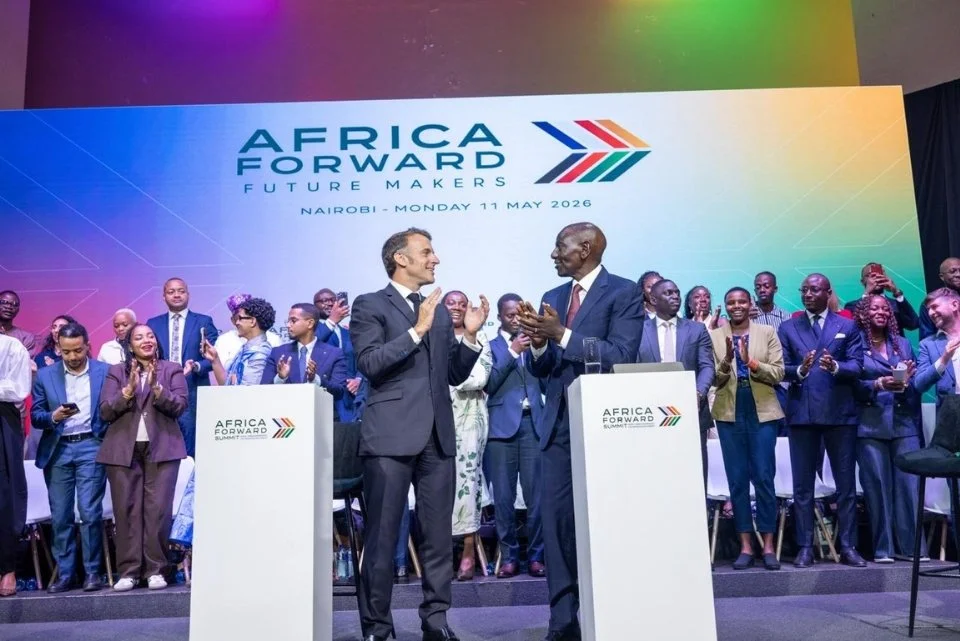
Gathered on 12th May 2026 in Nairobi during the peace and security segment of the Africa Forward Summit, the French and Kenyan Co-Presidents together with participating Heads of State and Government reaffirmed their commitment to peace, multilateralism, regional stability, and African-led solutions to security challenges across the continent. The declaration recognized that global instability, challenges to international law, and intensifying competition between powers continue to threaten peace, security, and sustainable development in Africa.
1. Commitment to Multilateralism and International Law
The declaration affirmed that effective and inclusive multilateralism, grounded in international law and the United Nations Charter, remains essential for lasting peace. Leaders emphasized the importance of the African Union and African regional organizations in advancing continental peace and stability.
2. Reform of the United Nations Security Council
Participants reaffirmed the urgent need for comprehensive reform of the United Nations Security Council to make it more effective and representative. The declaration supported the objectives of the Common African Position, including the Ezulwini Consensus and the Sirte Declaration, while reaffirming commitment to working together toward equitable African representation.
3. Responsible Use of the Veto
The declaration emphasized that responsible use of the veto strengthens the credibility and moral authority of the United Nations Security Council. Leaders called upon permanent members of the Council to refrain from using the veto in situations involving genocide, crimes against humanity, and large-scale war crimes.
4. Support for African Peace Operations
Participants expressed support for African peace operations and called for the implementation of United Nations Security Council Resolution 2719 to ensure predictable, sustainable, and adequate financing for African-led peace missions.
5. Strengthening African Security Capacities
The declaration supported the capacity building of African armies while respecting national sovereignty and strengthening the African peace and security architecture that underpins continental stability.
6. Rejection of External Interference and Mercenarism
Leaders rejected external interference and the privatization of security by external actors whose interests do not align with those of African countries and populations. The declaration reaffirmed relevant African Union principles on the elimination of mercenarism in Africa.
7. African Leadership in Mediation and Peacebuilding
The declaration reaffirmed that Africans must remain the principal stakeholders in mediating crises affecting the continent. Leaders emphasized the central role of the African Union, Regional Economic Communities, and Regional Mechanisms in facilitating inclusive mediation and sustainable peace processes.
8. Commitment to Negotiated Political Solutions
Participants reaffirmed the primacy of negotiated political solutions grounded in international law, sovereignty, and territorial integrity in resolving crises. The declaration also reaffirmed commitment to respecting international humanitarian law in armed conflicts affecting the region.
9. Addressing Terrorism and Violent Extremism
The declaration expressed deep concern over the continuing threat of terrorism and violent extremism across the continent. Leaders emphasized the importance of a comprehensive response that combines security measures with political, social, and economic solutions to sustainably address the root causes of instability.
10. Humanitarian Assistance and Development Financing
Participants acknowledged that humanitarian assistance remains essential during crises to protect vulnerable populations. The declaration further emphasized that inclusive mediation, development financing, and resilience-building are critical to addressing the root causes of conflict and instability.
11. Strengthening Regional Security Mechanisms
The declaration called for strengthened institutional capacities and collective security mechanisms to address ongoing conflicts in Sudan, South Sudan, the Great Lakes region, Somalia, and the Sahel region through cessation of hostilities, inclusive dialogue, counter-terrorism efforts, capacity building, and regional stabilization.
12. Linking Security and Development
Leaders underlined the strong connection between security, inclusive economic growth, youth empowerment, education, climate resilience, and diaspora engagement as essential foundations for sustainable peace and development across Africa.