
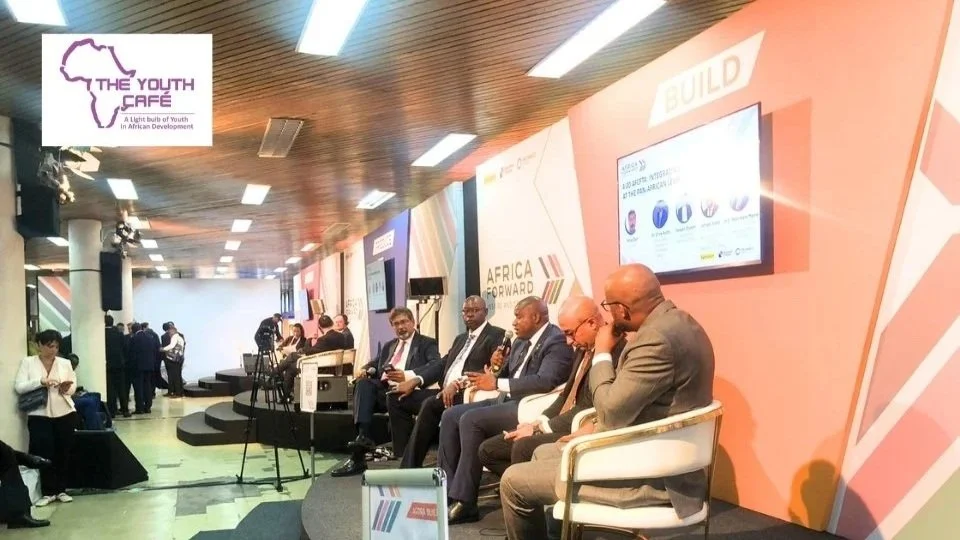
During the Africa Forward Summit held on 11–12 May 2026 in Nairobi, Heads of State and Government from France and African countries met together with representatives from international financial institutions, development banks, and development partners to discuss renewed international partnerships, development financing, and Africa’s long-term economic transformation. The declaration emphasized the need for partnerships grounded in mutual respect, co-investment, sovereignty, resilience, and shared prosperity.
1. Introduction
1.1 Participation and International Cooperation
The summit brought together African and French leaders alongside representatives from the International Monetary Fund (IMF), World Bank Group, African Development Bank Group (AfDB), European Bank for Reconstruction and Development (EBRD), European Investment Bank (EIB), West African Development Bank (BOAD), Agence Française de Développement Group (AFD), and the Pact for Prosperity, People and the Planet (4P).
1.2 Support for Development Financing and Partnerships
Participants welcomed the French G7 presidency and its focus on development financing and international partnerships, while positioning the declaration as a contribution to ongoing global discussions on sustainable development and international cooperation.
2. Building a Partnership of Equals
2.1 Strengthening Africa-Europe Relations
The declaration reaffirmed that trade and economic relations between Africa, France, and Europe remain important sources of collective stability and shared prosperity.
2.2 Responding to Global Instability
Participants acknowledged that ongoing geopolitical conflicts, particularly in the Middle East, continue to affect global financial stability, energy markets, agricultural inputs, and food security, increasing vulnerabilities for African economies.
2.3 Addressing Demographic Pressures and Employment
The declaration recognized demographic shifts across developing economies and emphasized the urgent need for job creation to absorb the growing youth workforce entering labour markets.
2.4 Advancing a Renewed Development Partnership
Participants emphasized that Africa’s future development requires a partnership of equals built on mutual interests and shared prosperity. The declaration acknowledged the limitations of the current development financing system and committed to advancing partnerships based on co-creation, co-investment, research collaboration, capacity building, knowledge sharing, and long-term value creation while respecting national sovereignty and country ownership principles.
2.5 Strengthening Global Financial Architecture
The declaration committed to improving the efficiency of the global financial architecture for Africa while strengthening the sovereignty, resilience, and ownership of African partner countries and ensuring that vulnerable populations are not left behind.
2.6 Supporting Sustainable Growth and Regional Integration
Participants committed to strengthening political engagement on global public goods, trade, and economic cooperation to attract investment, stimulate regional integration, promote local value addition, and create decent jobs, particularly for women and youth.
2.7 Supporting Industrialization and the AfCFTA
The declaration reaffirmed commitment to supporting African economies to industrialize, diversify exports, and integrate into regional markets. Leaders also reaffirmed support for the full operationalization of the African Continental Free Trade Area (AfCFTA) as a driver of economic sovereignty and industrial transformation.
2.8 Promoting High Standards and Competitiveness
Participants committed to promoting high international standards for quality, safety, transparency, and sustainability in infrastructure, goods, and services across African markets to strengthen value chains and improve long-term competitiveness.
2.9 Addressing Debt and Financing Challenges
The declaration welcomed increasing recognition of the impact of debt on African economies and supported efforts to strengthen debt transparency, improve restructuring processes, and explore innovative financial instruments including Climate-Resilient Debt Clauses and Debt-for-Development swaps.
2.10 Supporting Concessional Financing Mechanisms
Participants commended the role of concessional financing tools such as the International Development Association (IDA) and African Development Fund (ADF) in promoting debt sustainability, investment, and support for fragile states and regional development priorities.
2.11 Supporting Vulnerable African Countries
The declaration emphasized the importance of supporting vulnerable African countries affected by external shocks, conflict, climate impacts, constrained fiscal space, and limited market access. Leaders highlighted the need to prioritize poverty reduction, nutrition, education, health, climate resilience, early childhood development, and gender equality.
3. Unlocking More Capital for Africa
3.1 Advancing Sustainable Development and Climate Action
Participants reaffirmed commitment to accelerating sustainable development, economic transformation, and climate action across Africa while ensuring inclusive growth and resilience.
3.2 Renewing International Development Cooperation
The declaration acknowledged increasing fragmentation and declining public resources within the international development landscape. Participants emphasized that Official Development Assistance (ODA) should be complemented by renewed international cooperation, private capital mobilization, and broader financing approaches including Total Official Support for Sustainable Development (TOSSD).
3.3 Mobilizing Development Finance
Leaders emphasized the need to mobilize all forms of development finance, domestic and international, public and private, while strengthening African resilience, sovereignty, and national ownership of development priorities.
3.4 Supporting Strategic Sectors and Local Entrepreneurs
The declaration welcomed initiatives supporting infrastructure, agribusiness, healthcare, tourism, energy, and value-added manufacturing, while recognizing partnerships such as Mission 300 (M300), AgriConnect, AIM2030, and programs supporting African entrepreneurs and local champions.
3.5 Improving Investment Environments
Participants emphasized the importance of improving institutional quality, governance, macroeconomic stability, business environments, and project bankability to attract long-term private investment into African economies.
3.6 Strengthening Domestic Resource Mobilization
The declaration acknowledged the importance of strengthening domestic resource mobilization through improved tax systems, digitalization, transparency, reduced informality, and stronger financial markets to support sustainable development and investor confidence.
3.7 Addressing Risk Allocation Challenges
Participants recognized that Africa faces constraints related to risk allocation and pricing, requiring strategic interventions to improve investment conditions and unlock large-scale financing.
3.8 Enhancing Coordination in Development Financing
The declaration called for greater coordination, interoperability, simplification, and collaboration among development financing institutions to create a more efficient and integrated financing architecture for Africa.
4. Advancing the New African Financial Architecture
4.1 Strengthening Local Capital Markets
Participants emphasized the importance of deeper local capital markets, stronger banking systems, guarantee schemes, concessional financing, and long-term investment mechanisms to support private investment across Africa.
4.2 Recognizing the Role of the IMF
The declaration acknowledged the role of the International Monetary Fund (IMF) in surveillance, financial assistance, and capacity development for African economies.
4.3 Supporting the African Development Bank Vision
Participants welcomed the African Development Bank Group’s vision for advancing a New African Financial Architecture for Development in collaboration with regional and international partners.
4.4 Expanding Financial Partnerships and Investment Mechanisms
The declaration welcomed initiatives aimed at strengthening guarantee mechanisms, expanding local currency financing, supporting MSMEs, mobilizing private capital, and increasing collaboration among African and international development institutions.
4.5 Scaling Up Guarantees and Credit Enhancement Mechanisms
Participants emphasized the need to expand high-quality guarantees and credit enhancement tools to reduce the cost of capital and attract long-term investment, particularly in low-carbon technologies.
4.6 Strengthening Multilateral Guarantee Platforms
The declaration welcomed the World Bank Group guarantee platform hosted at the Multilateral Investment Guarantee Agency (MIGA) and encouraged expanded guarantee issuance to support development projects across Africa.
4.7 Mobilizing Private Investment and Green Finance
Participants welcomed initiatives such as the Global Emerging Markets Risk Database (GEMS) and the Global Green Bond Initiative aimed at improving transparency, risk assessment, and development of green bond markets across emerging economies.
4.8 Supporting an Integrated African Financial System
The declaration supported efforts led by the African Development Bank Group to strengthen a more integrated and efficient African financial architecture while encouraging the use of Special Drawing Rights (SDRs) to support development financing.
4.9 Strengthening African Guarantee Architecture
Participants welcomed efforts to strengthen Africa’s guarantee architecture through institutions such as the African Trade and Development Insurance (ATIDI) platform to improve risk mitigation and mobilize private investment.
4.10 Supporting National Development Banks and Country Platforms
The declaration recognized the important role of national and regional development banks in mobilizing private finance. Participants also committed to supporting country-led platforms and coordination mechanisms aimed at unlocking greater investment into infrastructure and essential services across Africa.