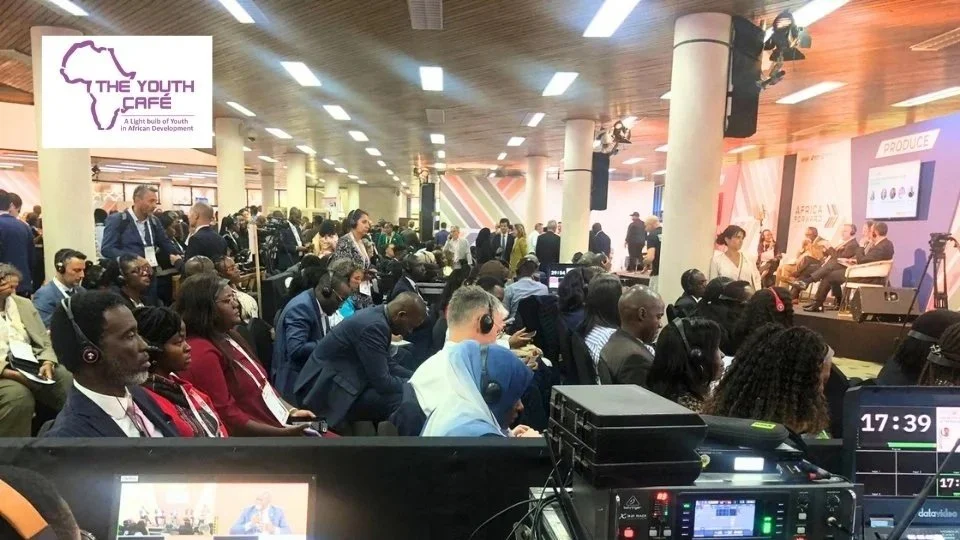
During the Africa Forward Summit held on 11–12 May 2026 in Nairobi, Heads of State and Government from African countries met together with representatives from France, international financial institutions, development banks, and development partners to discuss the global economic situation and its implications for Africa. The discussions took place against a backdrop of geopolitical tensions, global economic uncertainty, fragmentation, and macroeconomic imbalances that continue to disproportionately affect developing economies across the continent.
1. Participation and Global Economic Context
The summit brought together African Heads of State and Government alongside representatives from institutions including the International Monetary Fund (IMF), World Bank Group, African Development Bank Group (AfDB), European Bank for Reconstruction and Development (EBRD), European Investment Bank (EIB), West African Development Bank (BOAD), Agence Française de Développement Group (AFD), and the Pact for Prosperity, People and the Planet (4P).
Participants held discussions on the current global economic environment, recognizing the impact of geopolitical tensions, conflicts, increasing inequalities, global instability, fragmented supply chains, and disruptions in energy and food markets on African economies.
2. Africa’s Opportunities and Structural Challenges
The declaration recognized Africa as a continent of both opportunities and challenges. Leaders emphasized the need to transform demographic growth into a demographic dividend by creating labour markets capable of absorbing millions of young people annually.
The statement further highlighted the importance of industrialization, infrastructure development, local value addition, climate adaptation, energy transition, and technological advancement. It acknowledged Africa’s human capital, innovation, and natural resource endowment, including critical minerals — as key assets for sustainable growth and job creation.
3. Impact of Global Macroeconomic Imbalances on Africa
Participants acknowledged that Africa’s vulnerabilities are worsened by persistent global macroeconomic imbalances. The declaration highlighted continued dependence on raw material exports, increasing sovereign debt, limited diversification of African economies, and growing financing gaps as major structural challenges.
The statement further noted that structural overcapacities, distortive non-market practices, and unilateral trade measures negatively affect Africa’s industrialization efforts by depressing commodity prices, reducing competitiveness of emerging industries, discouraging investment, increasing borrowing costs, and limiting access to affordable long-term development finance.
4. Support for a Fair and Inclusive Multilateral Trading System
The declaration reaffirmed support for a rules-based, non-discriminatory, fair, open, inclusive, equitable, sustainable, and transparent multilateral trading system. Leaders emphasized the importance of addressing distortive subsidies, overcapacities, and unfair market conditions to support Africa’s industrialization agenda.
Participants also stressed the need to strengthen African regional value chains capable of promoting technology transfer, industrial resilience, decent jobs, and sustainable economic transformation across the continent.
5. Call for Balanced Global Economic Policies
The summit emphasized that strong, inclusive, and sustainable economic growth remains central to global prosperity. Leaders called on major economies to work together toward balanced macroeconomic policies that support global economic security, resilient financial systems, and equitable growth that benefits all countries, including developing economies.
6. Shared Responsibility in Reducing Global Imbalances
Participants urged major global economies to recognize their shared responsibility in reducing excessive global imbalances through coordinated domestic policies aimed at achieving balanced and sustainable growth.
The declaration further called on international financial institutions, particularly the IMF, to strengthen surveillance of global imbalances while considering the specific vulnerabilities of African countries affected by conflict, climate shocks, and structural development constraints.
7. Conveying Africa’s Concerns to Global Platforms
The declaration called on France, together with Kenya as a country associated with the G7, to convey Africa’s concerns regarding global economic imbalances and development challenges during the G7 Summit scheduled to take place in Evian in June 2026.