By Mumbiko King’ori Safe MIT Program Coordinator & Seefar Consortium Representative at the UN IMRF 2026 Director of Partnerships, The Youth Cafe
As the flags of 193 United Nations Member States fluttered outside the UN Headquarters in New York during the Second International Migration Review Forum (IMRF 2026), a quiet but seismic shift was taking place inside the conference halls. For an entire week, world leaders, ministers, and heads of state debated the highly contested clauses of the 2026 Progress Declaration. Yet, the most vital revelation did not come from a closed-door diplomatic session. It came from a stark, unyielding demographic truth that defines our century: Africa is young, and the future of global mobility is irrevocably African.
Africa currently harbors the youngest population on the planet. Over 60% of the continent’s population is under the age of 25, and by 2030, young Africans will constitute 42% of global youth. This demographic reality means that international migration is not merely a technical policy agenda for sub-Saharan Africa; it is an existential, lived reality for millions of young people seeking dignity, livelihood, and purpose.
Recognizing this, The Youth Cafe, the largest pan-African youth-led and youth-serving non-governmental organization in Africa, stepped up to represent the continent’s youth at this quadrennial global review. Standing at the absolute vanguard of grassroots and policy transformation, The Youth Cafe, alongside the Seefar Consortium, brought a clear, evidence-based message to New York: If you want to fix global migration governance, you must stop treating youth as passive subjects of policy and start empowering them as designers of the solution.
THE LIVED REALITY: DISMANTLING THE "HOPE GAP"
The core lesson of IMRF 2026 is that global governance is finally attempting to catch up with the realities of the classroom. UN Secretary-General António Guterres opened the plenary by declaring that the "migration crisis" is not a crisis of human movement, but a crisis of collective state governance, heavily distorted by political fear-mongering and misinformation.
Through the cross-border Safe Migration Information and Training (Safe MIT) initiative—generously funded by the European Union and contracted by the International Centre for Migration Policy Development (ICMPD) through the MMD Grant Facility, the consortium has given a name to the driver behind this crisis: The "Hope Gap."
In many classrooms across Kenya, Morocco, Nigeria, and Senegal, brilliant young minds between the ages of 13 and 18 are losing faith in local systems. They view irregular migration not as a choice, but as the only logical ladder to success. Traffickers exploit this gap, using digital platforms and false promises to lure youth onto treacherous paths across the Sahara or the Mediterranean. The Youth Cafe and the consortium partners, the Seefar Foundation, MeCAHT in Nigeria, AJDL in Senegal, and YES in Morocco—are directly dismantling this gap. By institutionalizing migration literacy into schools via standard curricula, such as the KICD-approved curriculum in Kenya, the initiative is replacing dangerous rumors with accurate data, teaching young Africans how to navigate legal pathways while building resilience at home.
CHAMPIONING INNOVATION: FROM CLASSROOMS TO SPORTS ACADEMIES
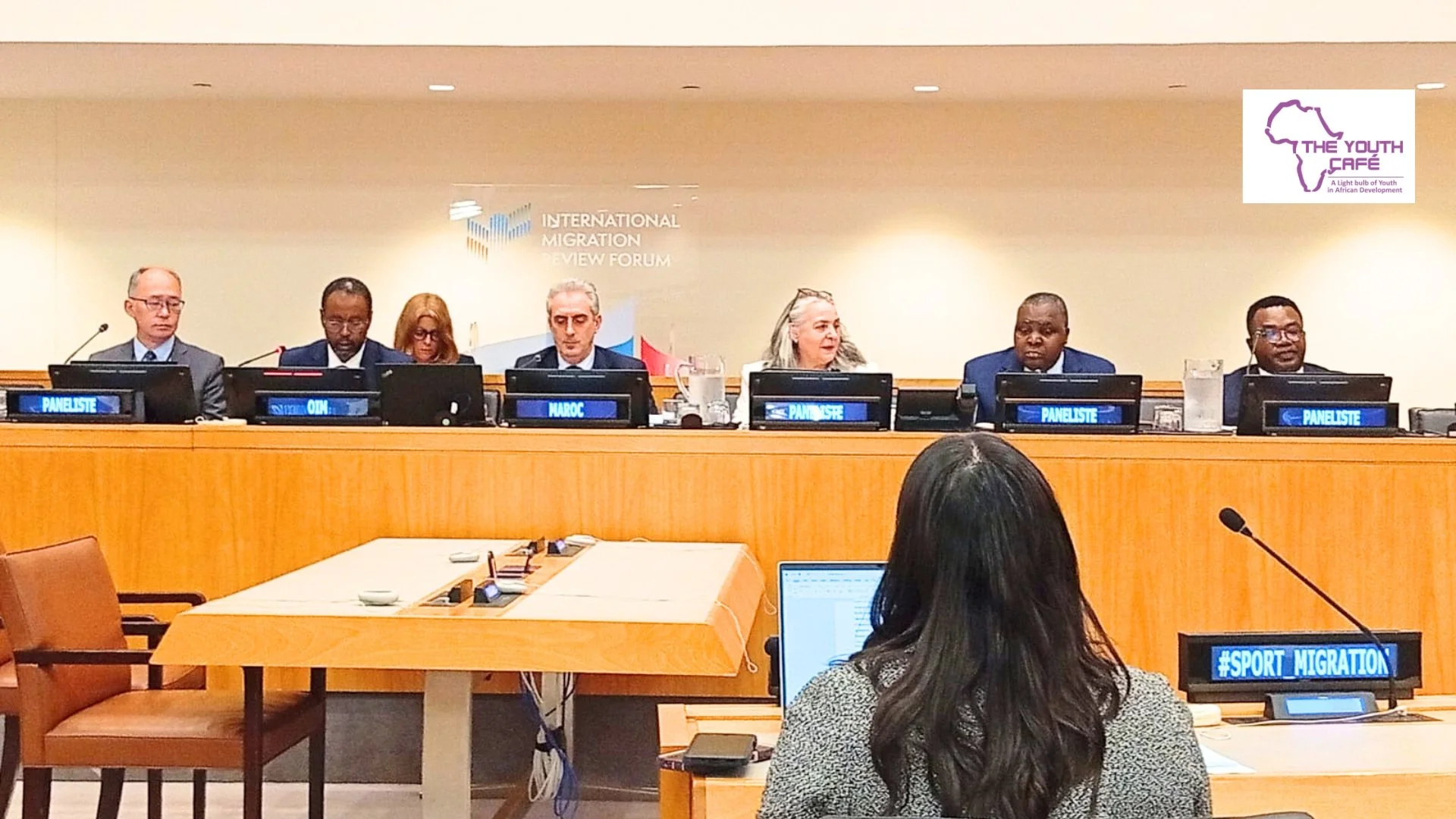
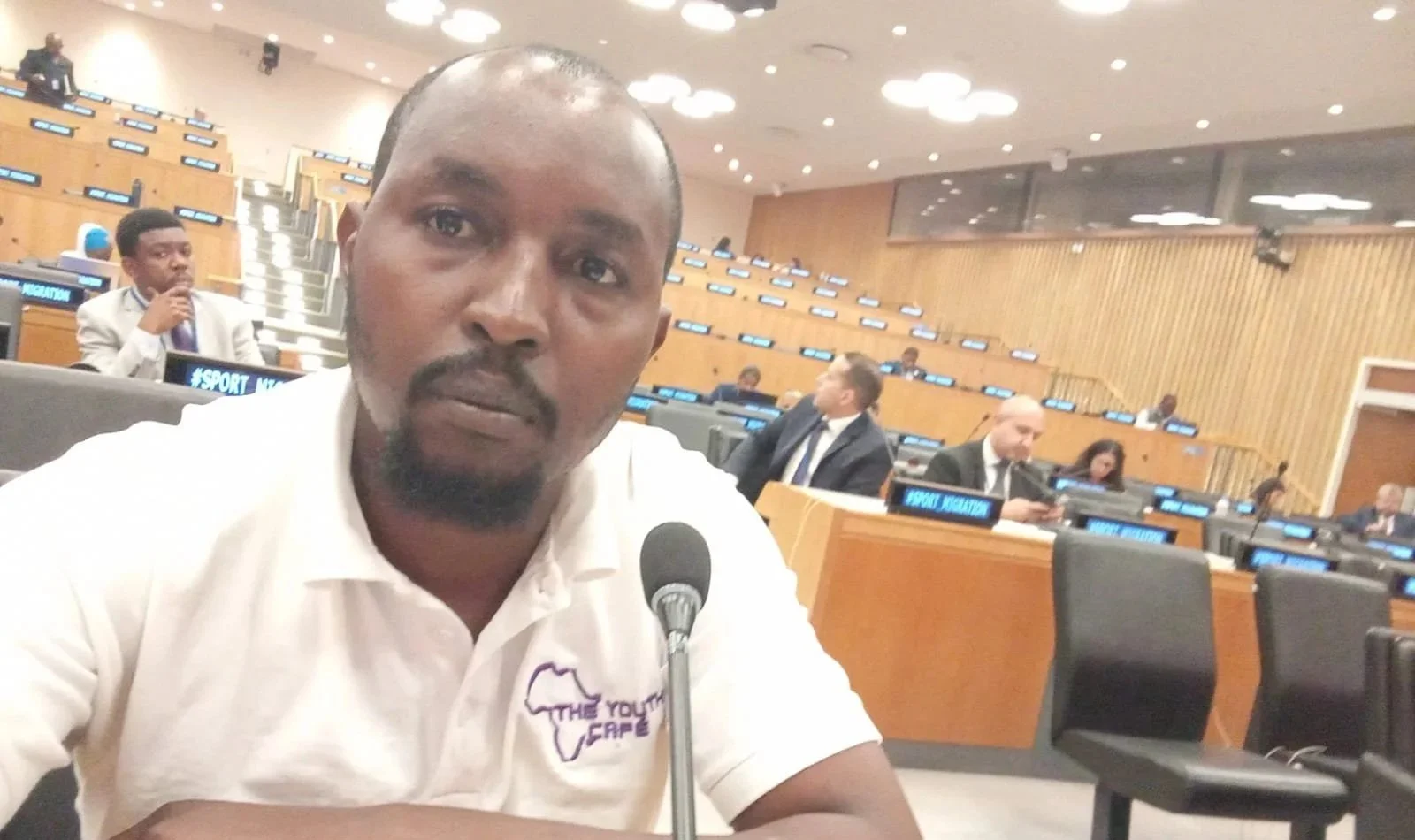
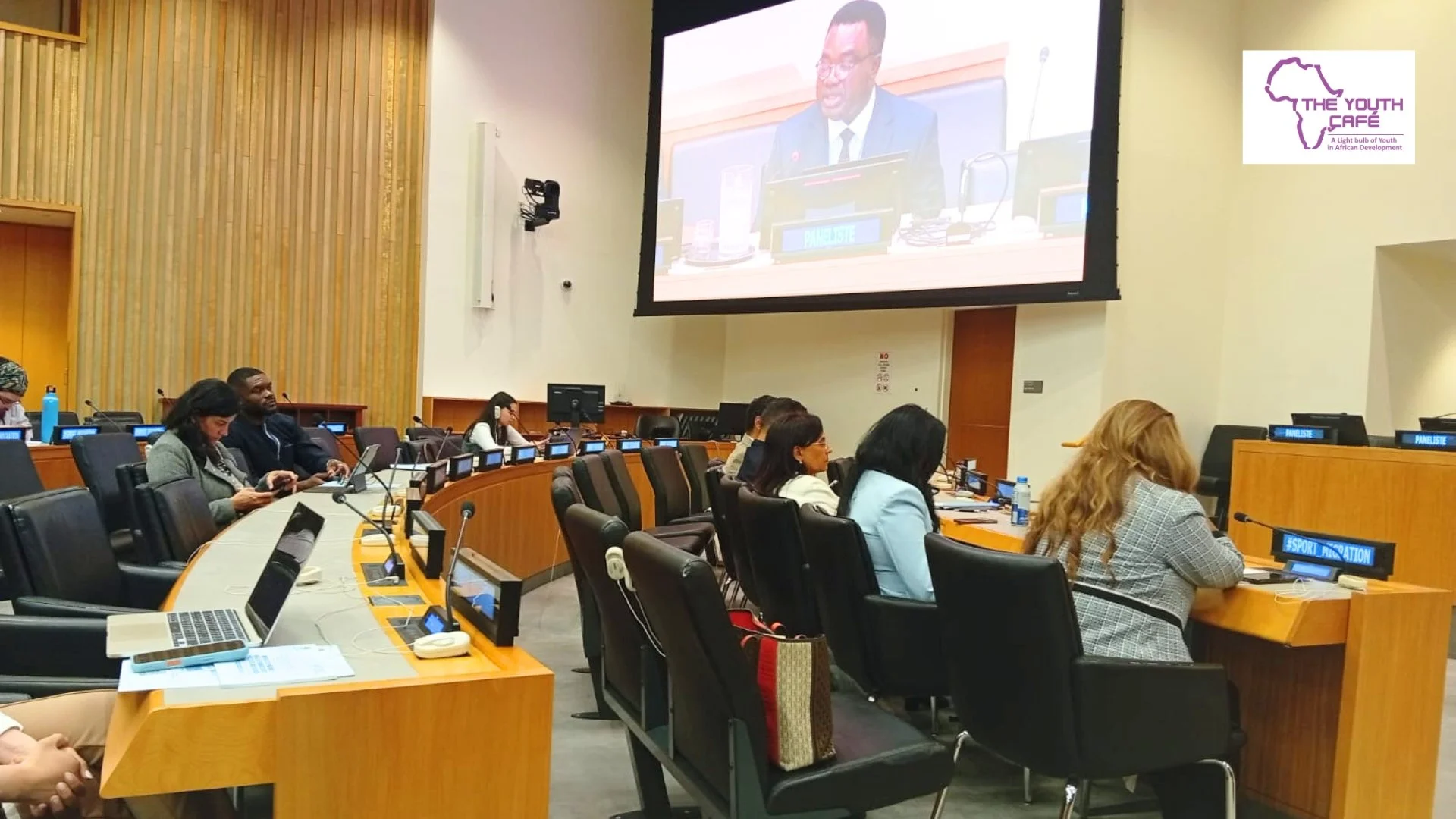
The consortium's advocacy in New York pushed far beyond traditional school walls. At a high-level side event co-hosted by the Kingdom of Morocco and IOM - UN Migration, titled "Sport and Migration: Advancing Inclusion, Protection and Empowerment through Multi-Stakeholder Partnerships," The Youth Cafe and the Seefar Consortium, through its representative Mumbiko King'ori, took the curriculum straight to the running tracks and football pitches.
Delivering a key intervention, Mumbiko King'ori challenged Member States to look closely at the athletic sector. The dream of professional sports is a beautiful driver of African youth talent, but it has become highly vulnerable to exploitation. Predatory "scouts" frequently use the allure of European contracts to entrap young athletes into irregular, unmapped migration pathways. By taking the Safe MIT blueprint and embedding it directly into regional sports academies, the project can protect young talent from traffickers before they ever leave the training ground.
This vision was amplified at the African Union Permanent Observer Mission to the UN during the high-level event, "Intra-Africa Synergies on Safe Migration and Reintegration." Addressing African delegates at Africa House, The Youth Cafe advocated heavily for Safe Intra-Africa Migration as a vital, legal alternative pathway. The AU was urged to view the diaspora through an operational lens—not just as financial remittance pools to offset national budget deficits, but as working champions of safe migration. The event highlighted Ethiopia’s diaspora community fundraising model, where diaspora resources are directly pooled to fund the voluntary return and socio-economic reintegration of their citizens, as a prime example of sustainable, community-led migration financing.
DECODING NEW YORK: THE 2026 PROGRESS DECLARATION RESOLUTIONS
The defining legislative outcome of the forum was the formal adoption of the 2026 IMRF Progress Declaration (Draft Resolution A/AC.293/2026/L.1). For youth organizations and international donors looking to align their funding and programs, the resolutions are divided into four clear, actionable pillars:
Pillar 1: Expanding Regular Pathways and Skills Recognition (Objectives 2, 5, 6, 12)
The Resolution: Member States formally committed to scale up the availability, flexibility, and gender-responsiveness of regular labor, educational, and humanitarian pathways. The text explicitly calls for the total elimination of recruitment fees forced upon migrant workers and mandates the mutual regional recognition of skills and vocational qualifications.
The Safe MIT Blueprint: The Youth Cafe (Kenya) and YES (Morocco) will directly utilize this resolution to advocate that their respective ministries embed safe-migration protocols into national vocational centers and pre-departure academies, ensuring youth enter regular labor markets fully aware of their rights.
Pillar 2: Human-Rights-Based Border Governance & Anti-Trafficking (Objectives 8, 9, 10, 11, 13)
The Resolution: The declaration demands secure, integrated, and human-rights-compliant border screening systems. It calls for a synchronized, cross-border clampdown on human trafficking networks while ensuring child-sensitive, non-custodial alternatives to administrative detention.
The Safe MIT Blueprint: Building on this, MeCAHT (Nigeria) will scale its localized anti-trafficking alert networks, feeding real-time youth security data into national border monitoring mechanisms to capture and intercept smuggling pipelines early.
Pillar 3: Universal Access to Basic Services and Inclusion (Objective 15)
The Resolution: States pledged to dismantle legal and administrative barriers preventing migrants, regardless of status, from accessing essential services: primary education, basic healthcare, and emergency housing. It demands an end to public xenophobia and protects informal and domestic workers from exploitation.
The Safe MIT Blueprint: AJDL (Senegal) will spearhead municipal school campaigns, ensuring that migrant youth from surrounding transit states are granted safe, firewall-protected access to local primary schools without fear of deportation.
Pillar 4: Dignified Return and Sustainable Reintegration (Objective 21)
The Resolution: The text mandates the creation of comprehensive national integration strategies, linking organized post-arrival reception planning with psycho-social support and local labor market re-absorption.
The Safe MIT Blueprint: The Seefar Consortium is designing a specialized "Reintegration and Sports" module to help returning youth transition smoothly back into school and community athletic programs.
DIPLOMATIC MASTERY: SHINING A LIGHT ON KENYA’S LEADERSHIP
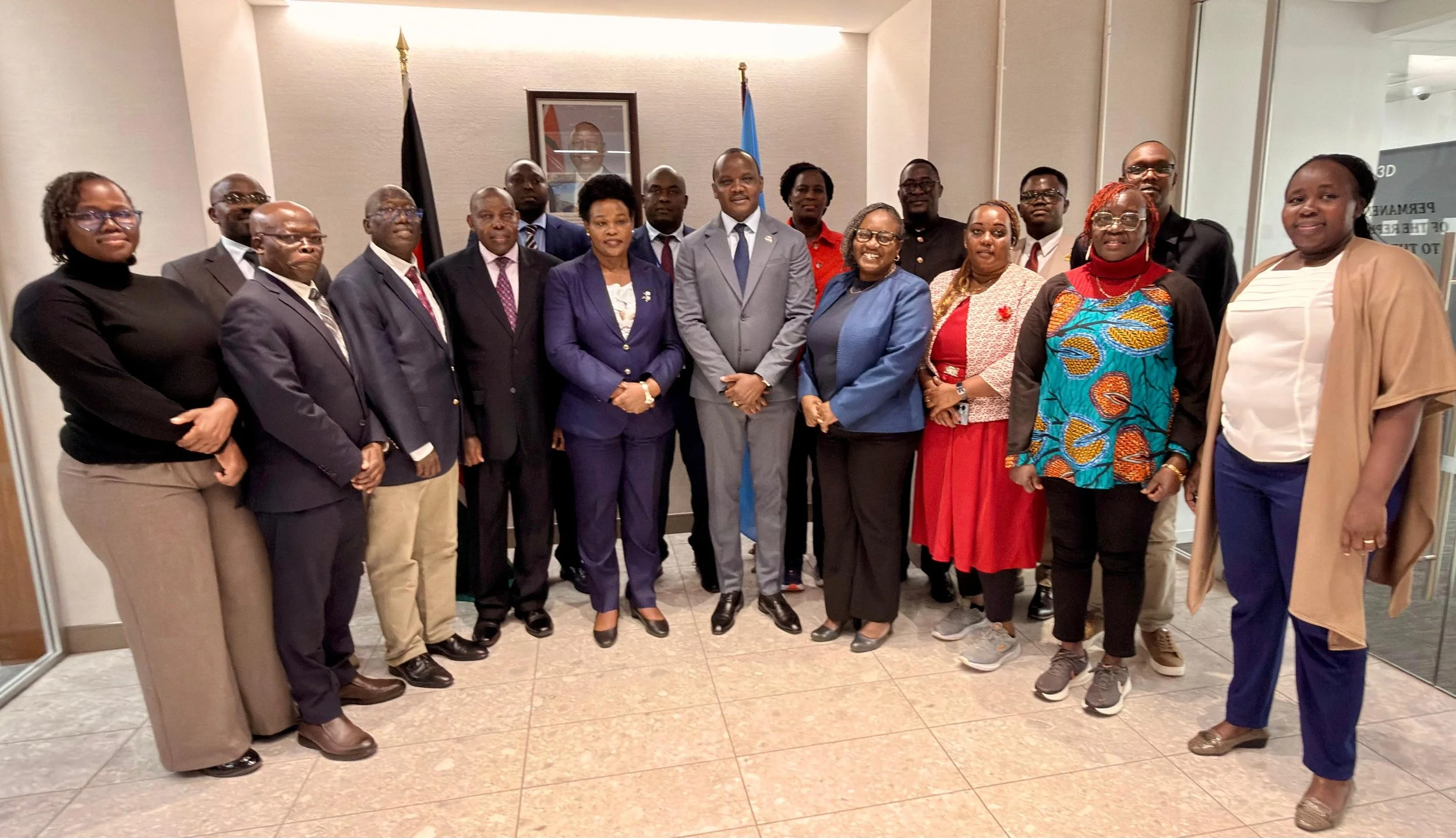
The adoption of this global framework would not have been possible without the exceptional diplomatic mastery of the Kenyan Delegation. Kenya stood out as a premier global leader at IMRF 2026, with H.E. Ambassador Erastus Ekitela Lokaale, Permanent Representative of the Republic of Kenya to the United Nations, serving as the official Co-Facilitator of the Progress Declaration alongside Luxembourg. Ambassador Lokaale’s transparent, inclusive, and tireless negotiation framework successfully brought fractured geopolitical blocks together to deliver a balanced, action-oriented global text.
Complementing this at the technical level, Director General Evelyn Cheluget (Directorate of Immigration Services, Ministry of Interior and National Administration) served as the Head of the Kenya Delegation. Delivering Kenya's official Country Statement from the General Assembly podium, DG Cheluget showcased Kenya’s stellar progress as a GCM Champion Country, demonstrating how Kenya has successfully aligned its national development philosophies with migrant protection and advanced data technologies.
The technical execution was seamlessly anchored by Mr. Lemmy Sirma, the leading migration expert at the Permanent Mission of Kenya to the UN, who expertly guided the intergovernmental consultation rounds to ensure African labor priorities were robustly reflected in the final text. The Youth Cafe extends its profound respect to this delegation; their leadership proved that Kenya does not just participate in global governance—it writes the blueprint.
A CALL TO ACTION FOR DONORS AND PARTNERS
The Second IMRF proved that the era of designing migration policies in isolation is over. The solutions that world leaders are calling for on paper are the exact solutions that the Seefar Consortium and The Youth Cafe are already delivering on the ground.
To our international partners, bilateral donors, and fellow pan-African civil society organizations: the infrastructure for youth protection is built, tested, and ready to scale. We invite you to join us in expanding the Safe MIT curriculum across sub-Saharan Africa, transforming schools and sports academies into fortresses of safe migration, and expanding opportunities for the continent's youth.
The IMRF 2026 has concluded, but our mission continues. Let us move from the halls of New York to the classrooms of Africa, and construct a future where every young African can thrive, belong, and succeed.
Partner with Us
Looking to collaborate on curriculum expansion, research, policy implementation or scale migration literacy? Mumbiko King'ori and the partnerships team are available for deep-dive strategy sessions, regional implementation partnerships, and international collaborations.
📧 Get in touch: partnerships@theyouthcafe.com
🌐 Explore our work: https://www.theyouthcafe.com/safe-mit
#IMRF2026 #SafeMIT #TheYouthCafe #SeefarConsortium #GlobalCompactForMigration #GCM #YouthEmpowerment #SafeMigration #AfricaRising #EducationFirst #SportAndMigration #UNHQ